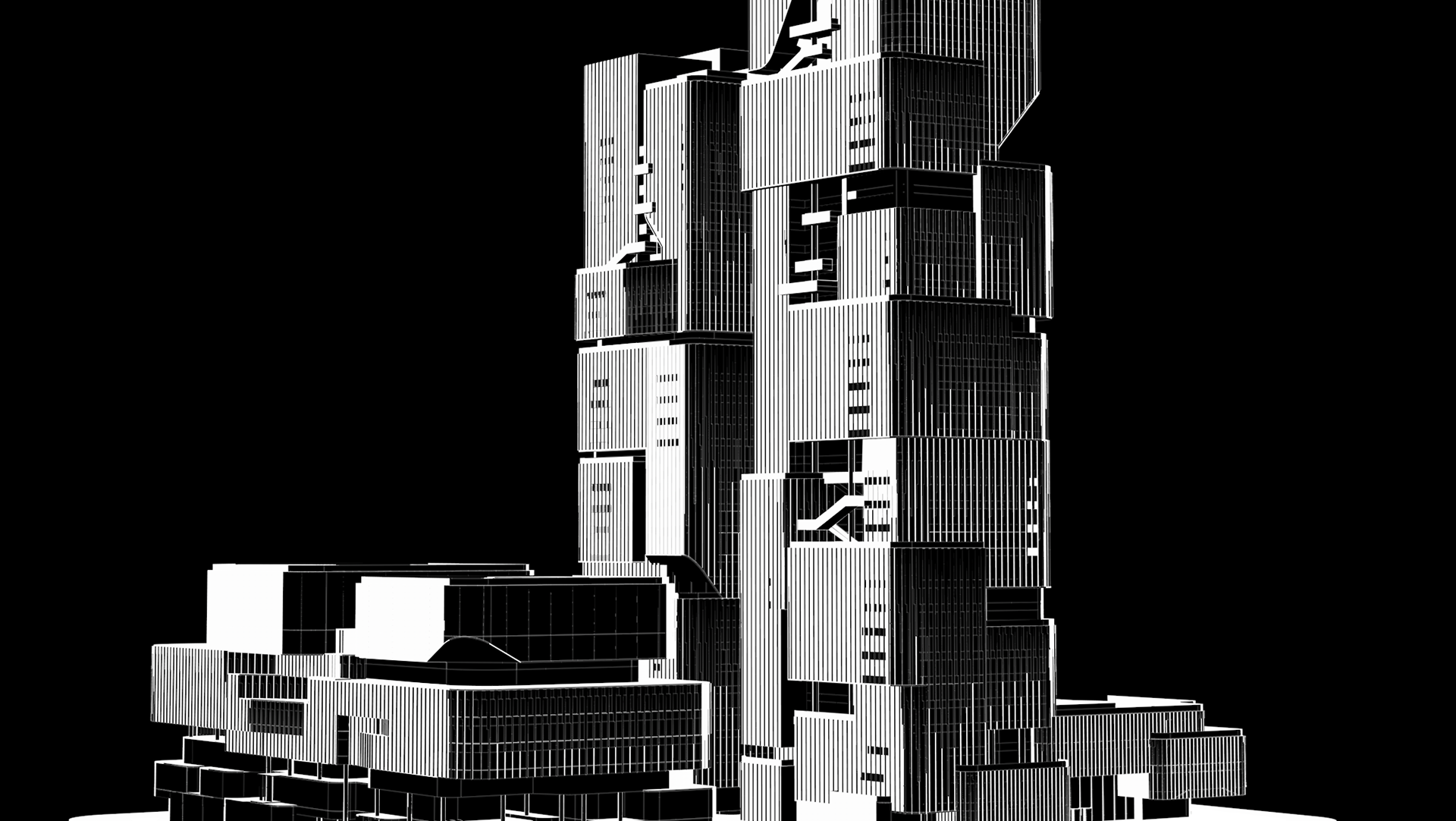
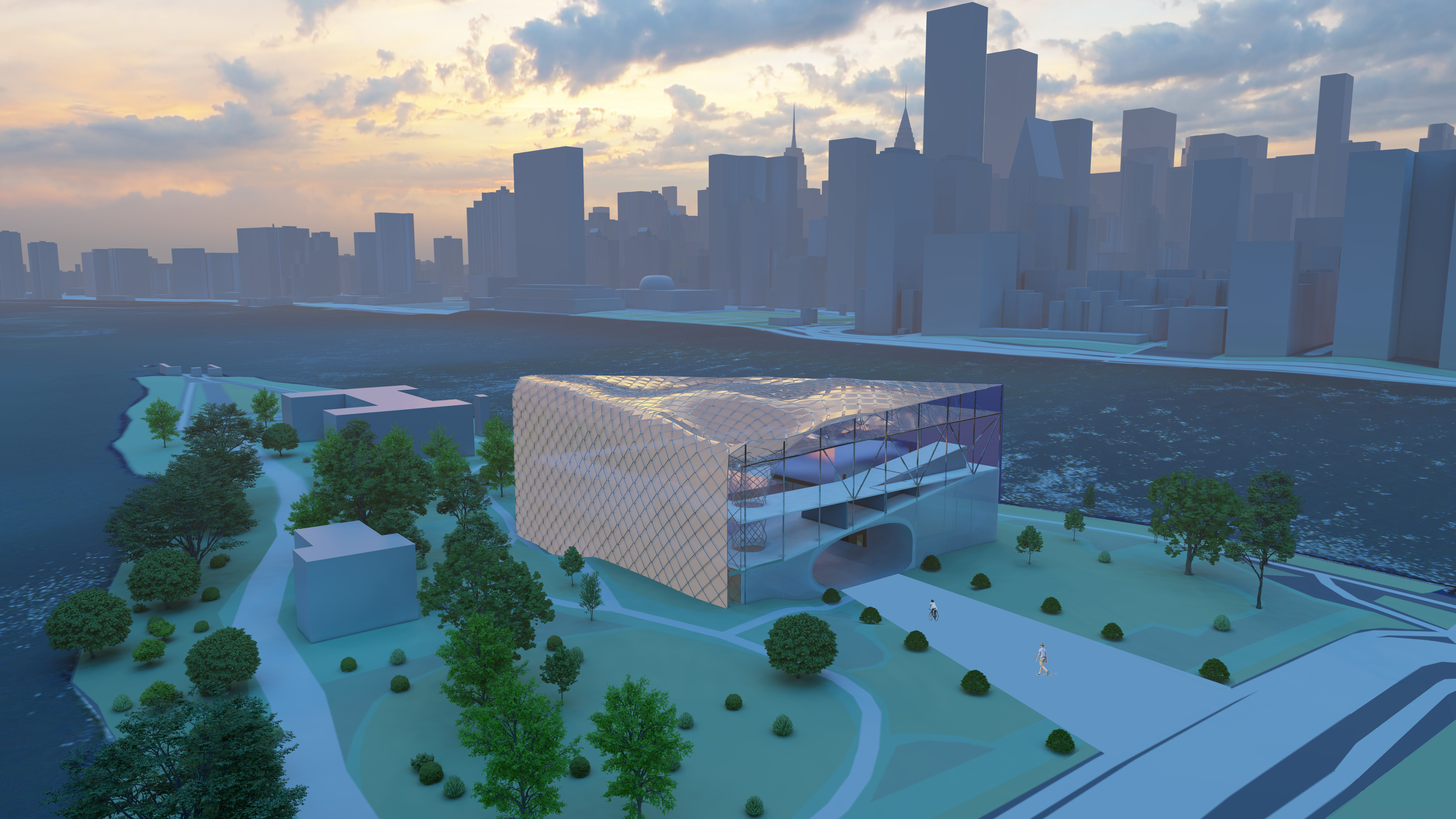
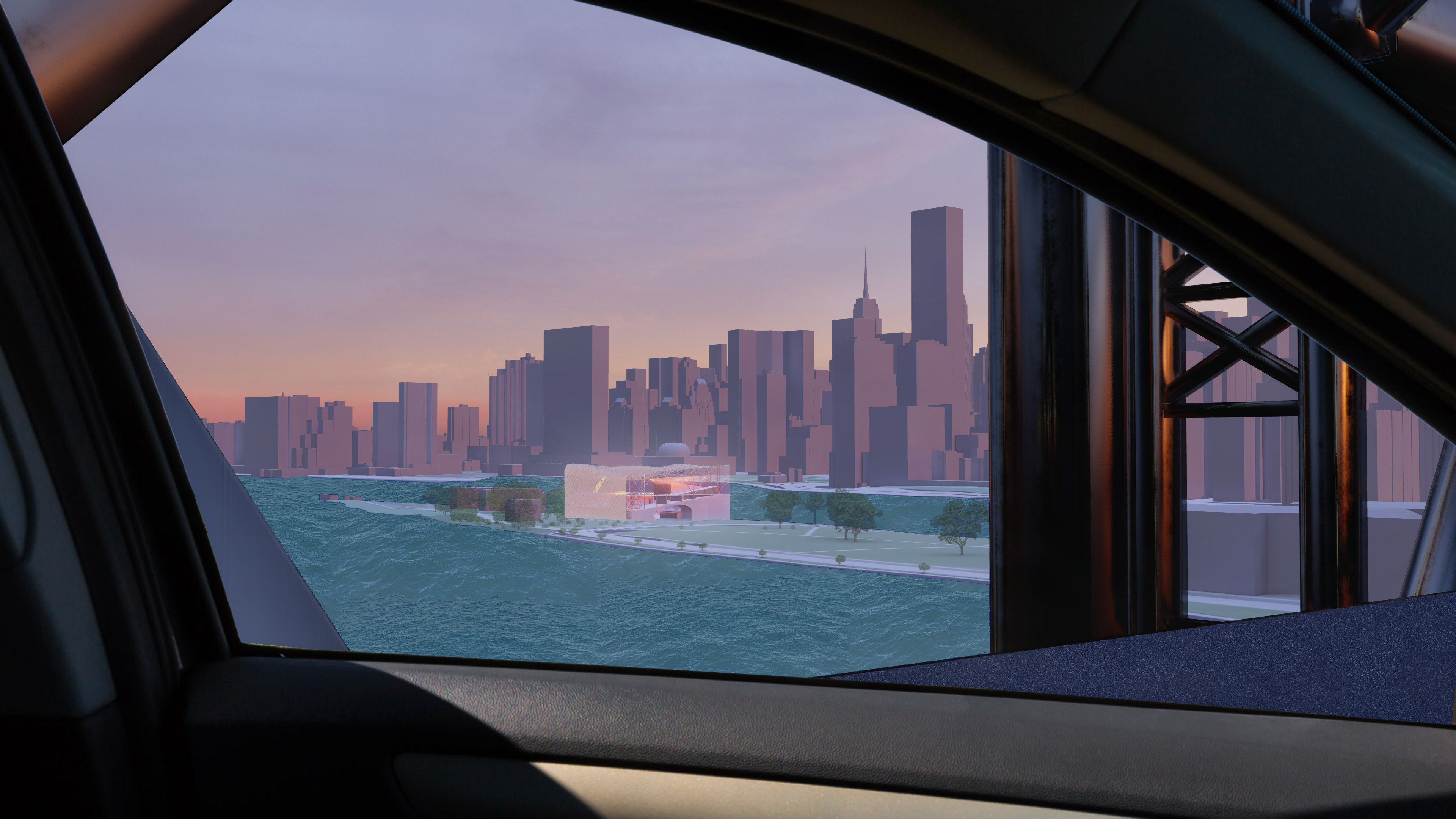
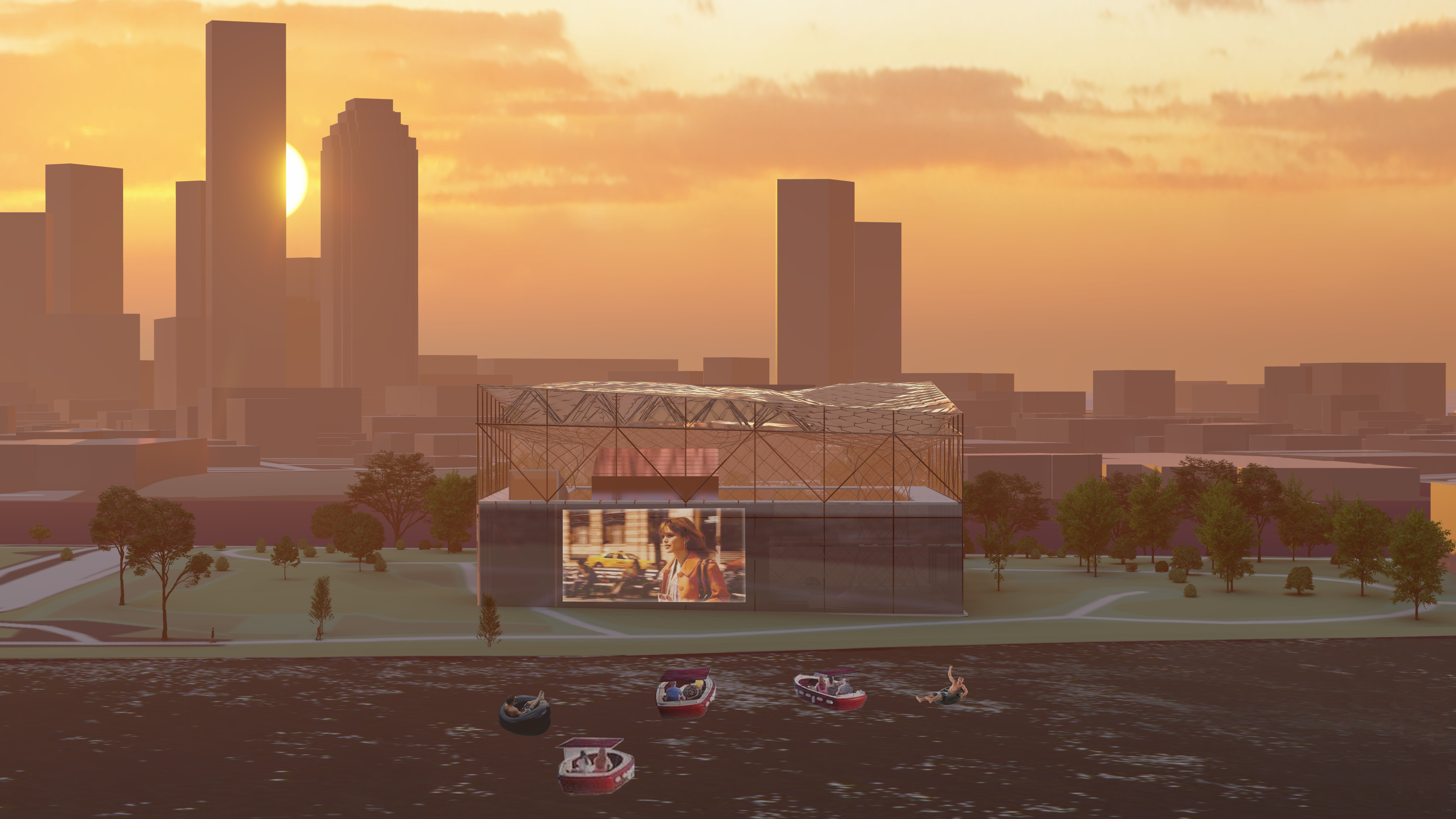
located at the head of Roosevelt Island, serving as an intermediary between Manhattan and Brooklyn. This project explores the relationship between the moving image and the moving body. Transprogramming indoor and outdoor movie theaters with high-speed and low-speed activities to create a space between real image and illusion, fast and slow.
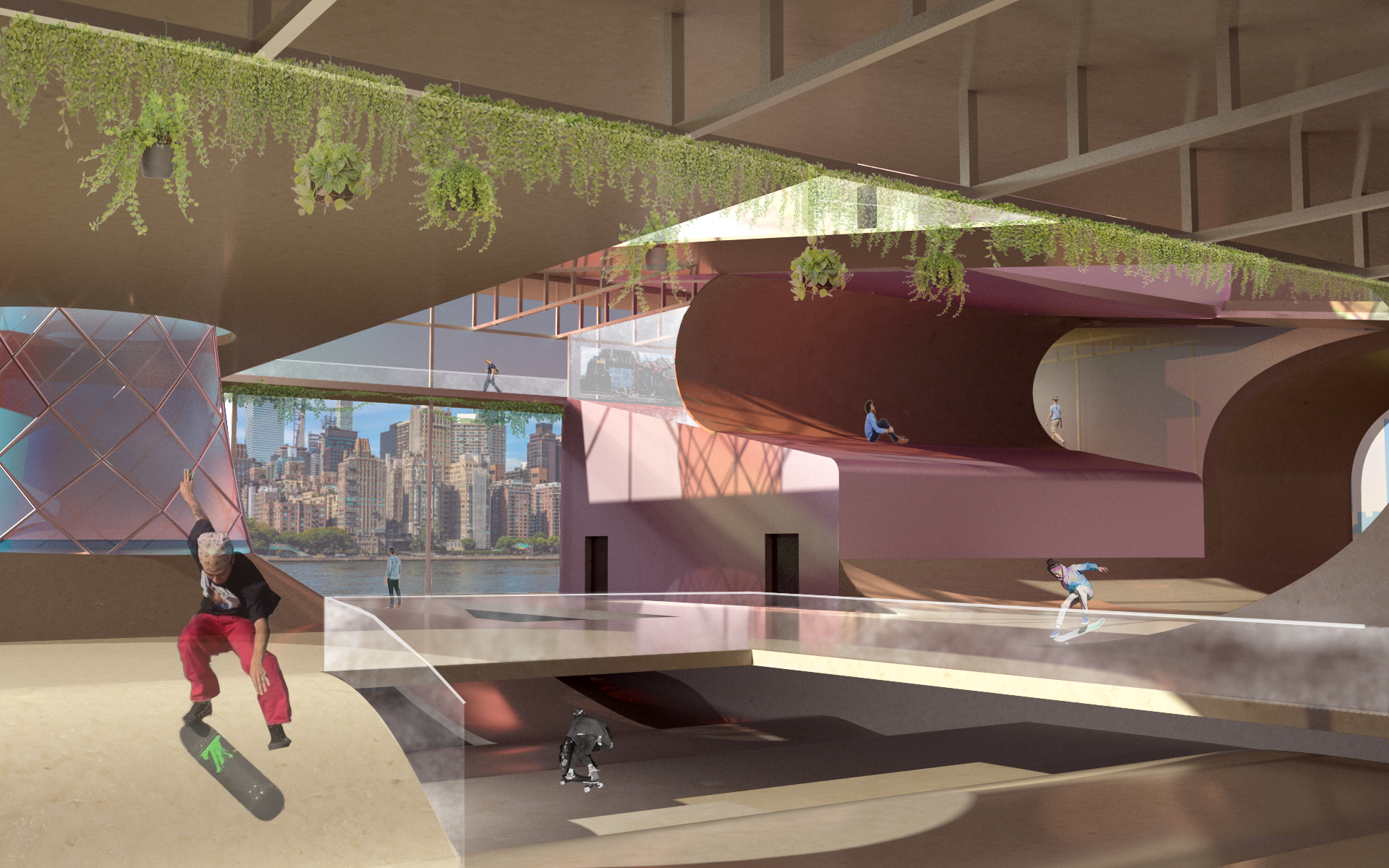
The building was meant to be enjoyed from both inside and out. The exterior of the building houses a display, while a central walkway serves as a halfpipe
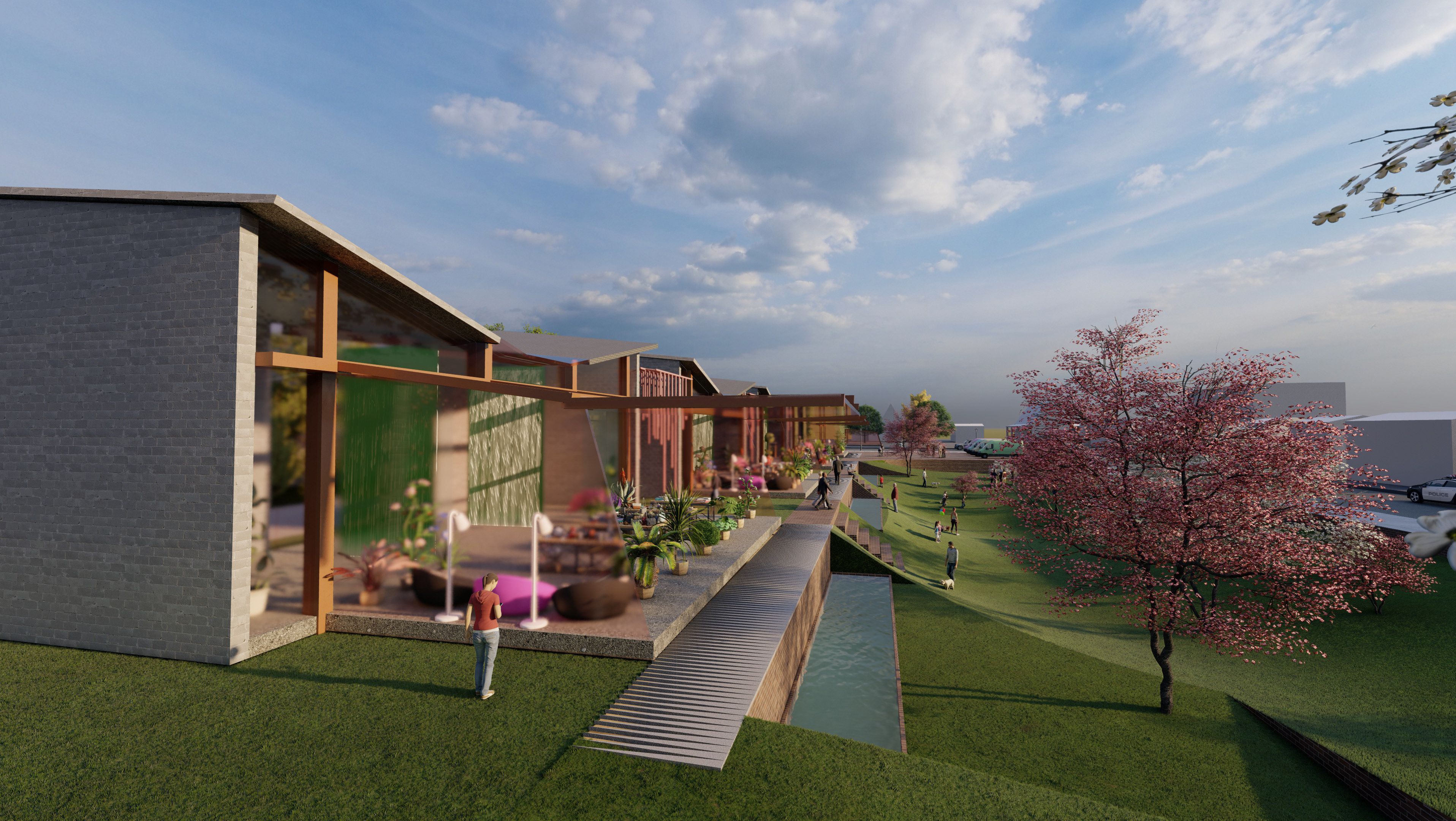
modeled in Rhino, rendered in Lumion.
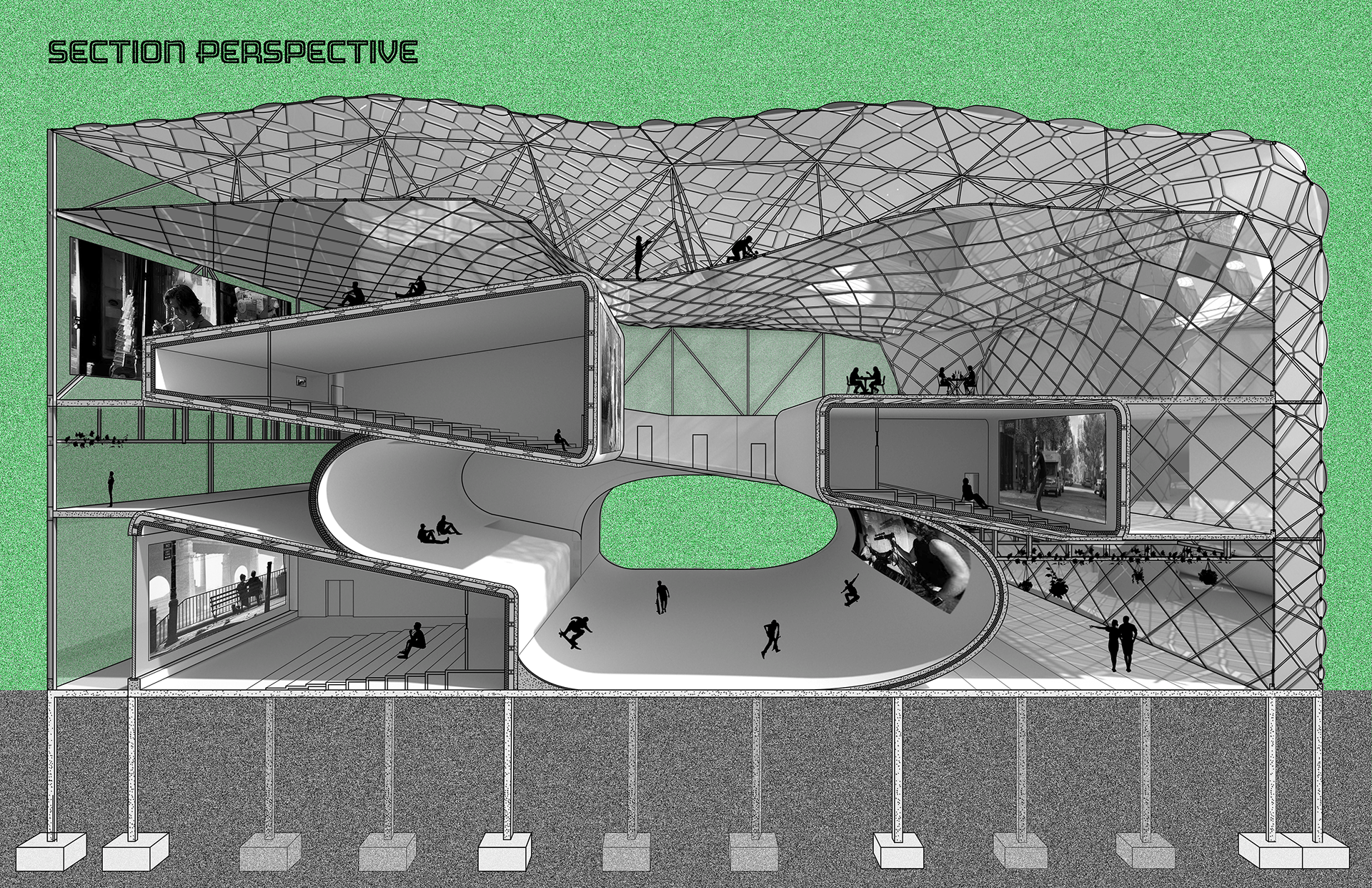
As height increases, speed decreases.
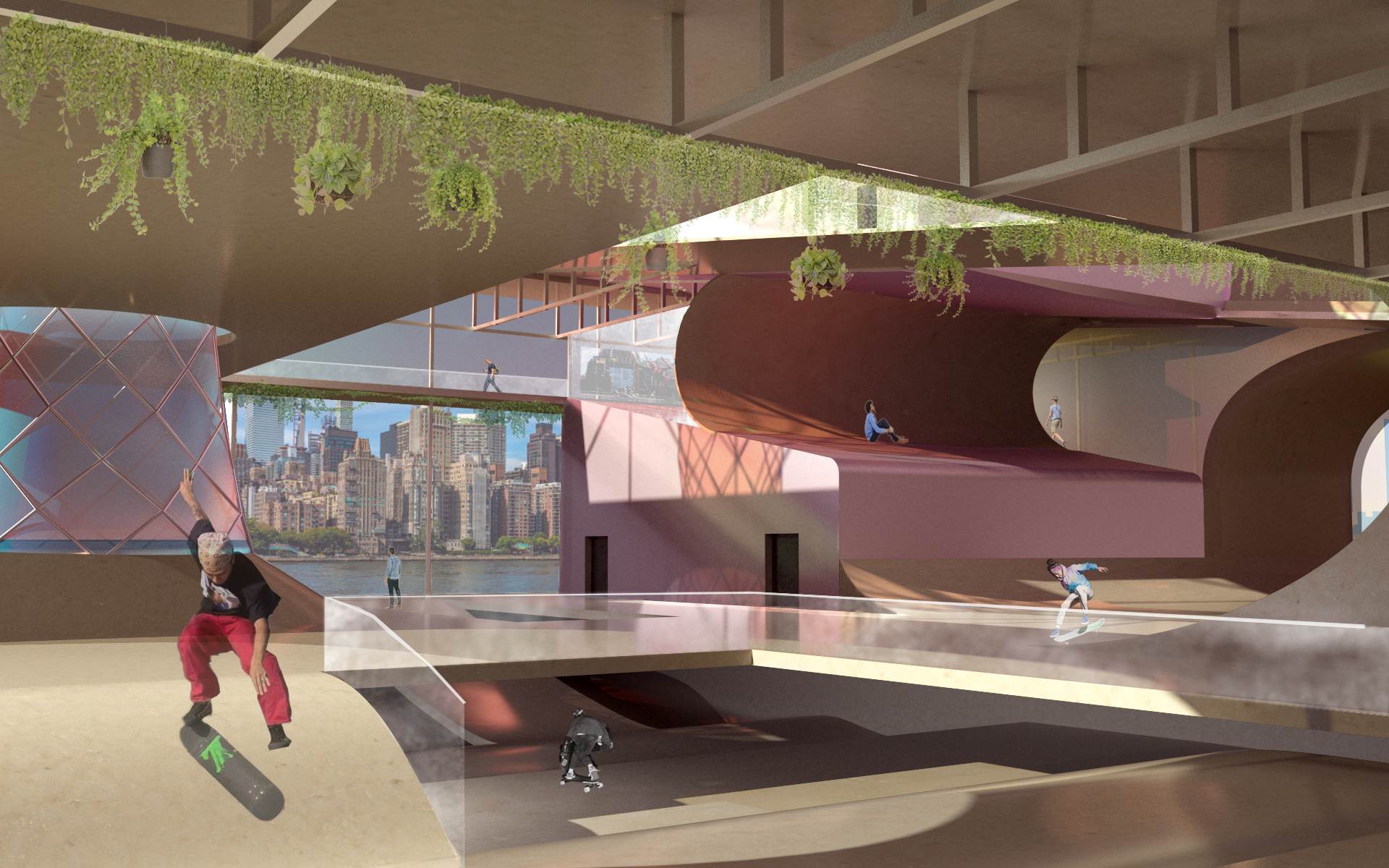
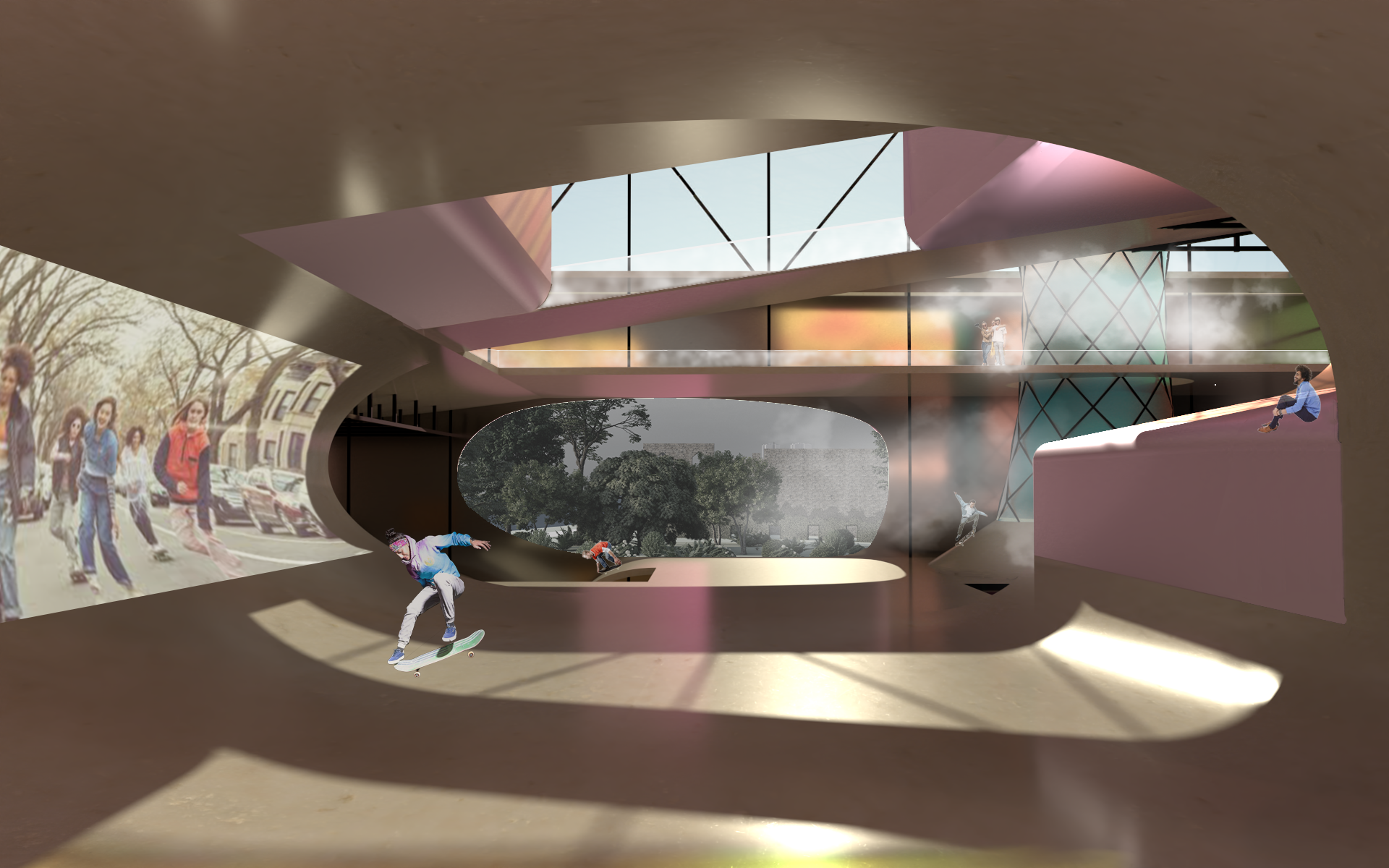
The bottom floors of the building are dominated by sport. Skateboarders zip through the pipes and curves as music videos are projected onto the walls around them.
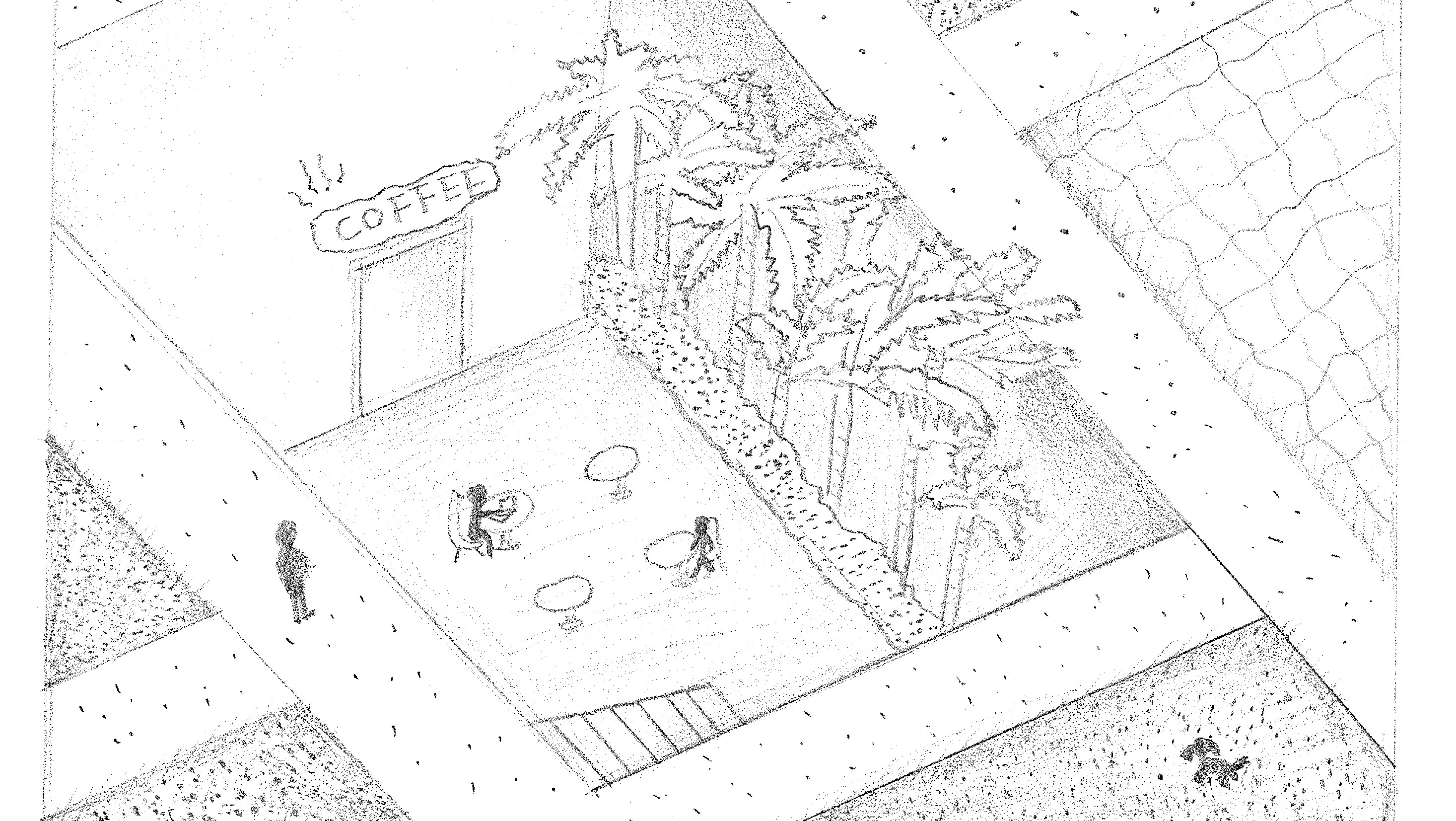
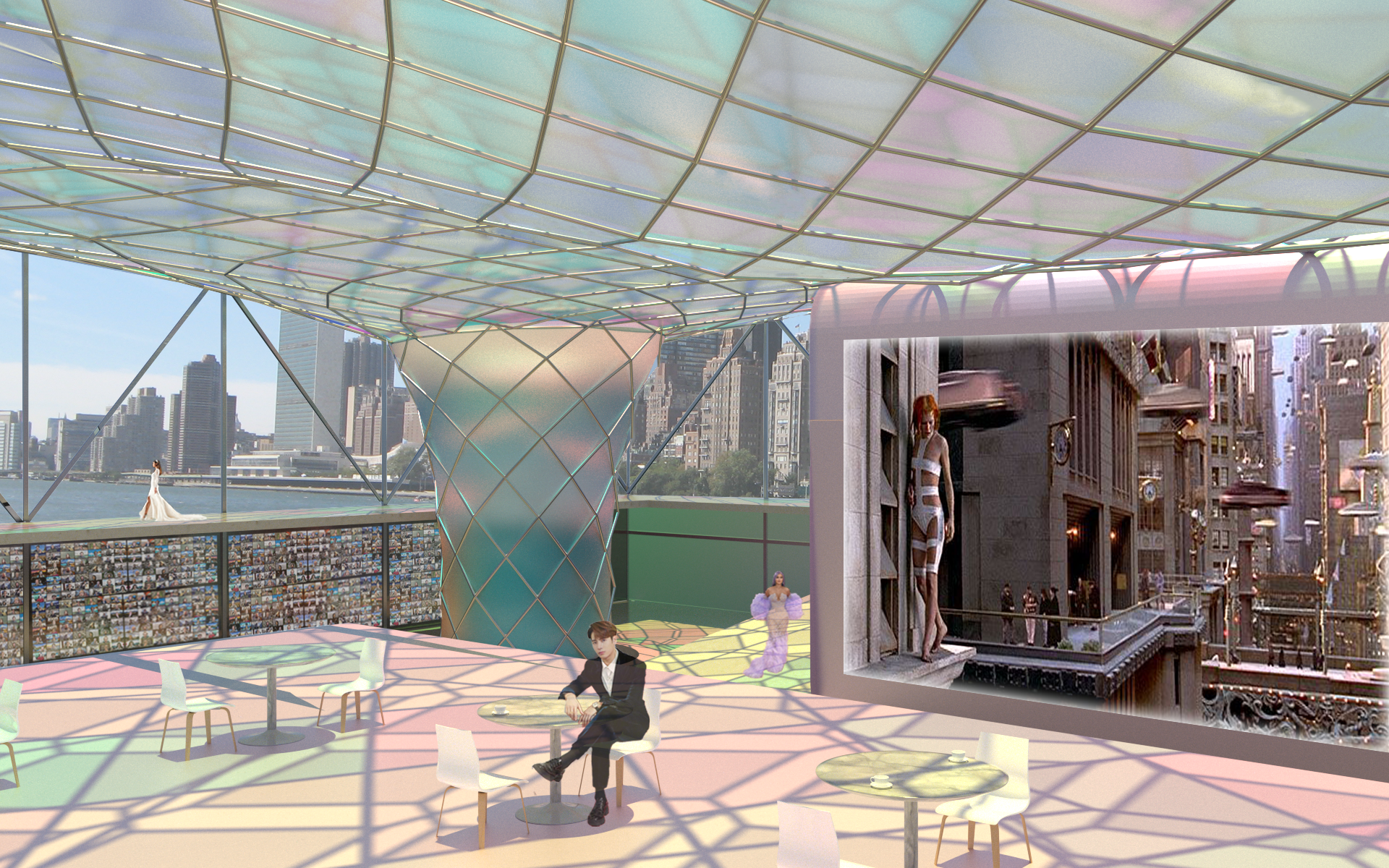
Moving higher, the space begins to open up. open seating and a cafe are found among the panoramic city view, with massive displays showing films from all eras.
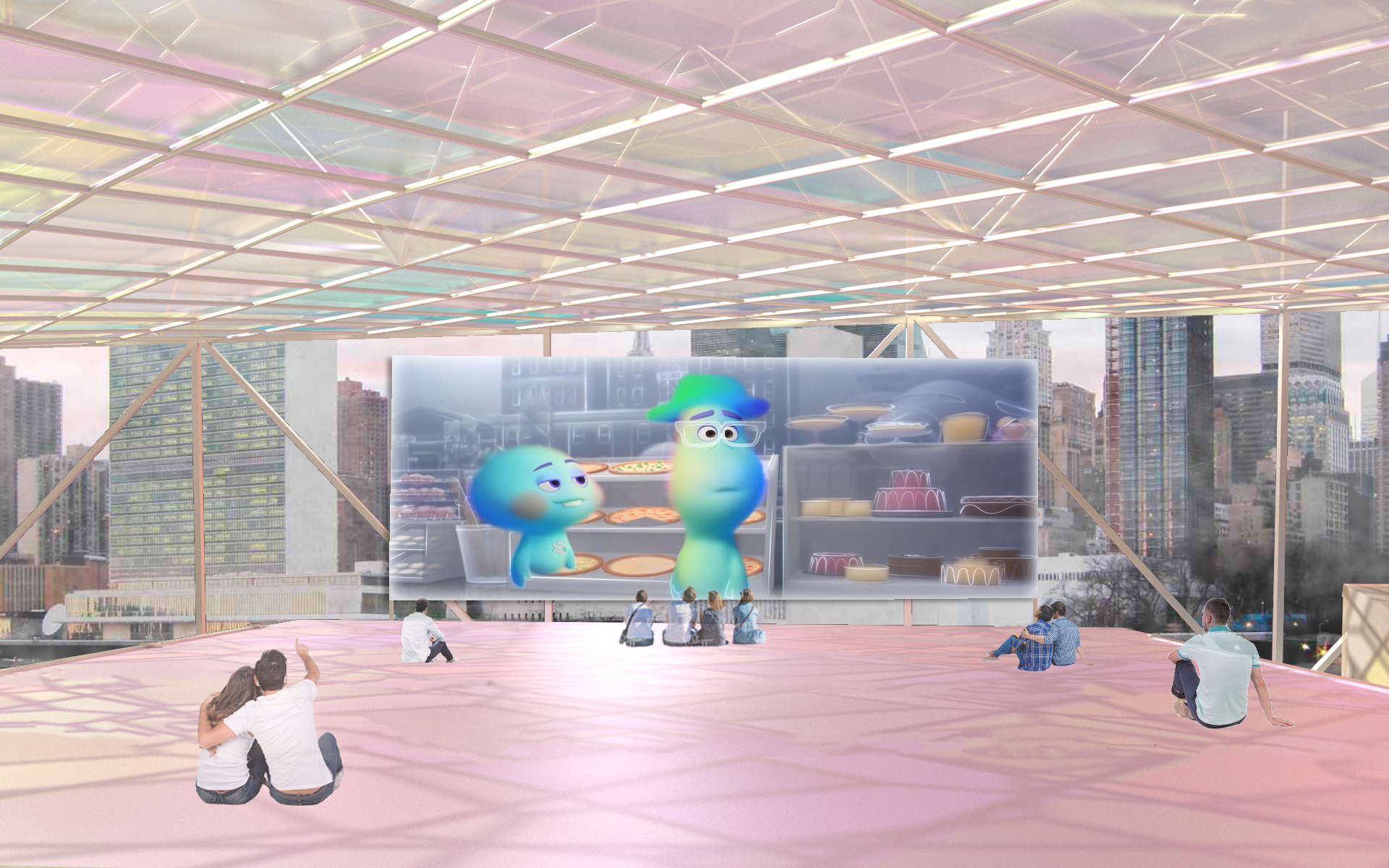
Higher still is the theater. a full-sized display with ample seating, the New York skyline displayed in the background.
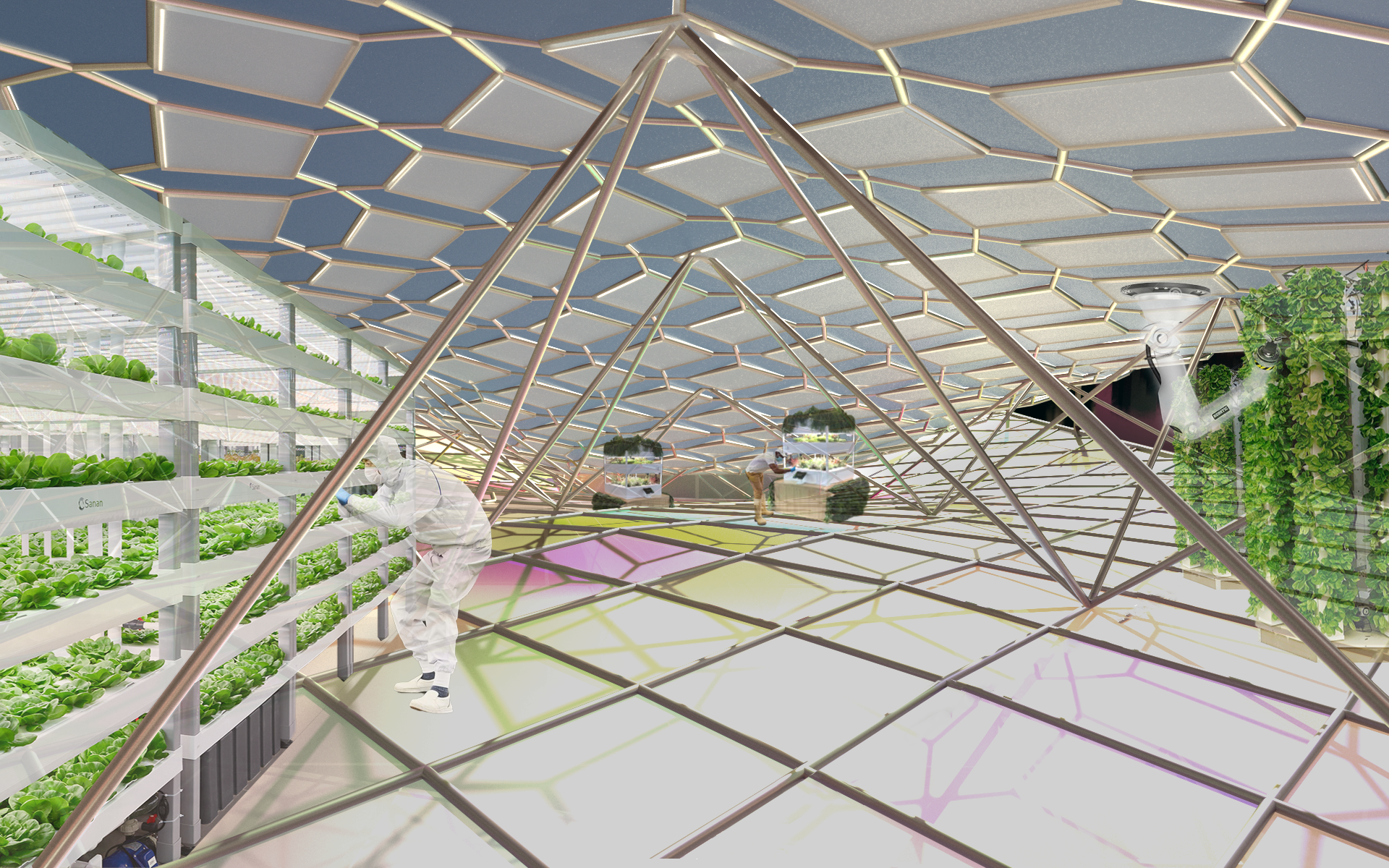
At the top, a community garden. A glass ceiling opens the space to the sky, allowing ample sunlight and providing temperature regulation year-round.
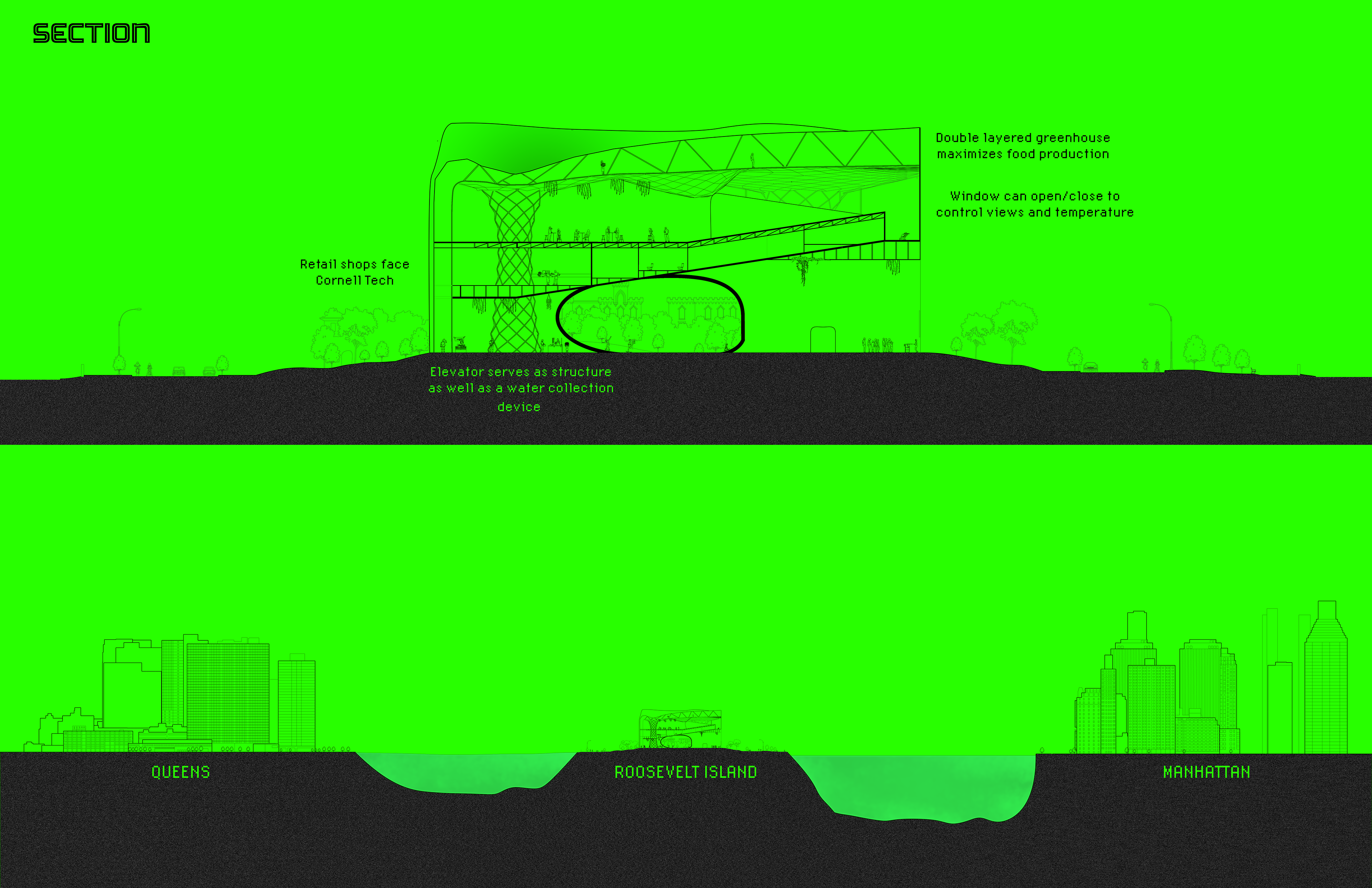
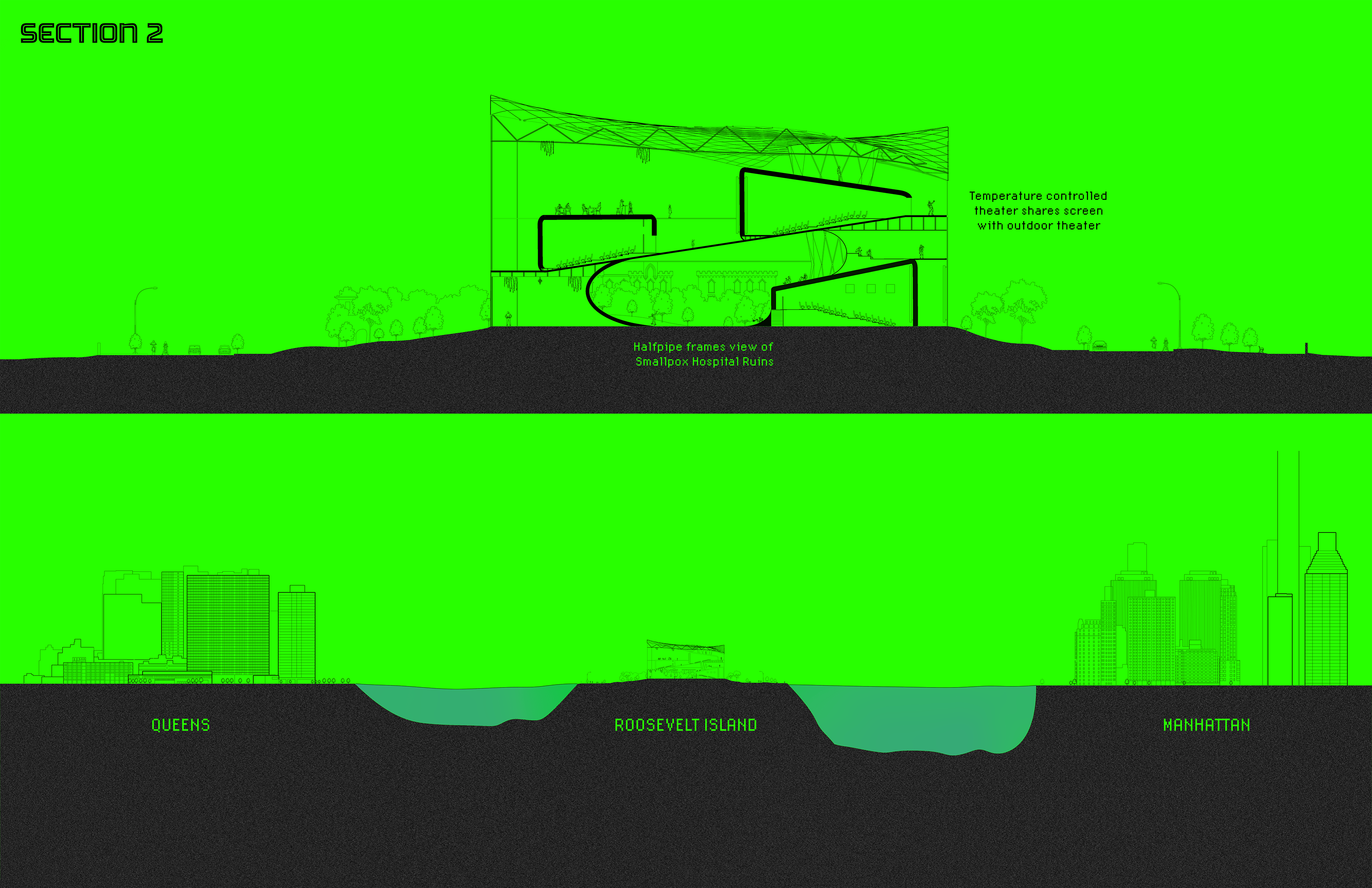
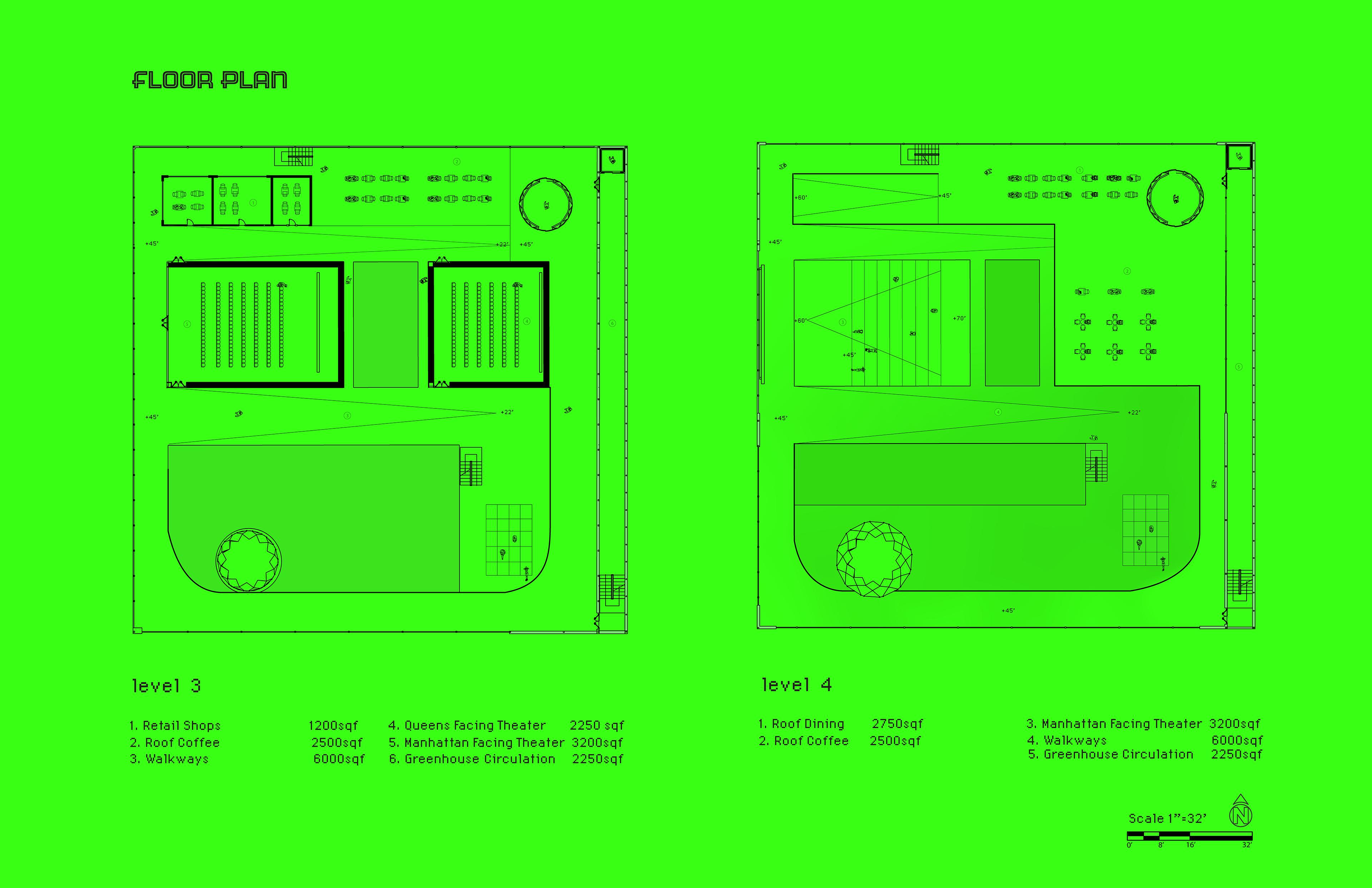
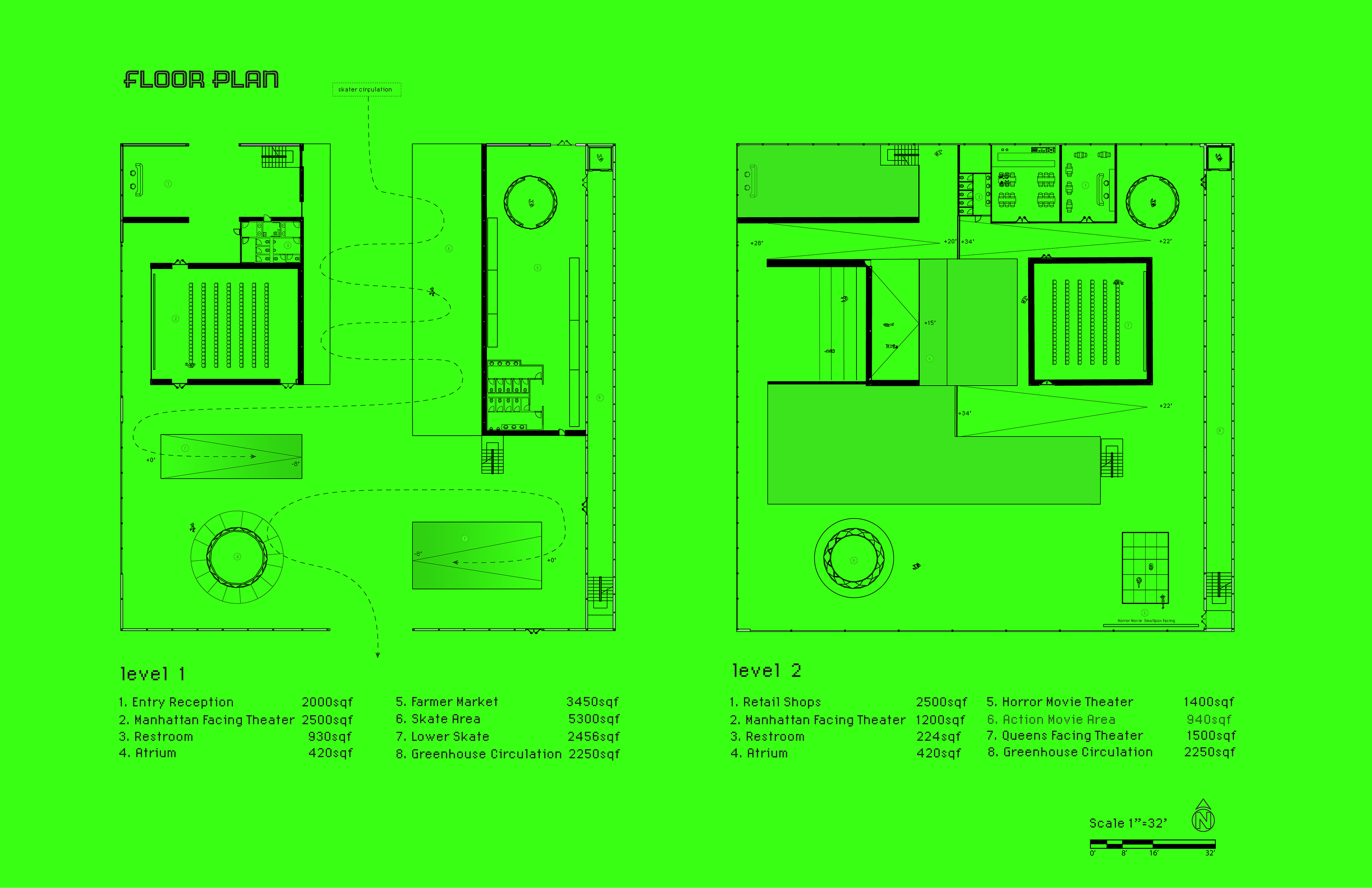
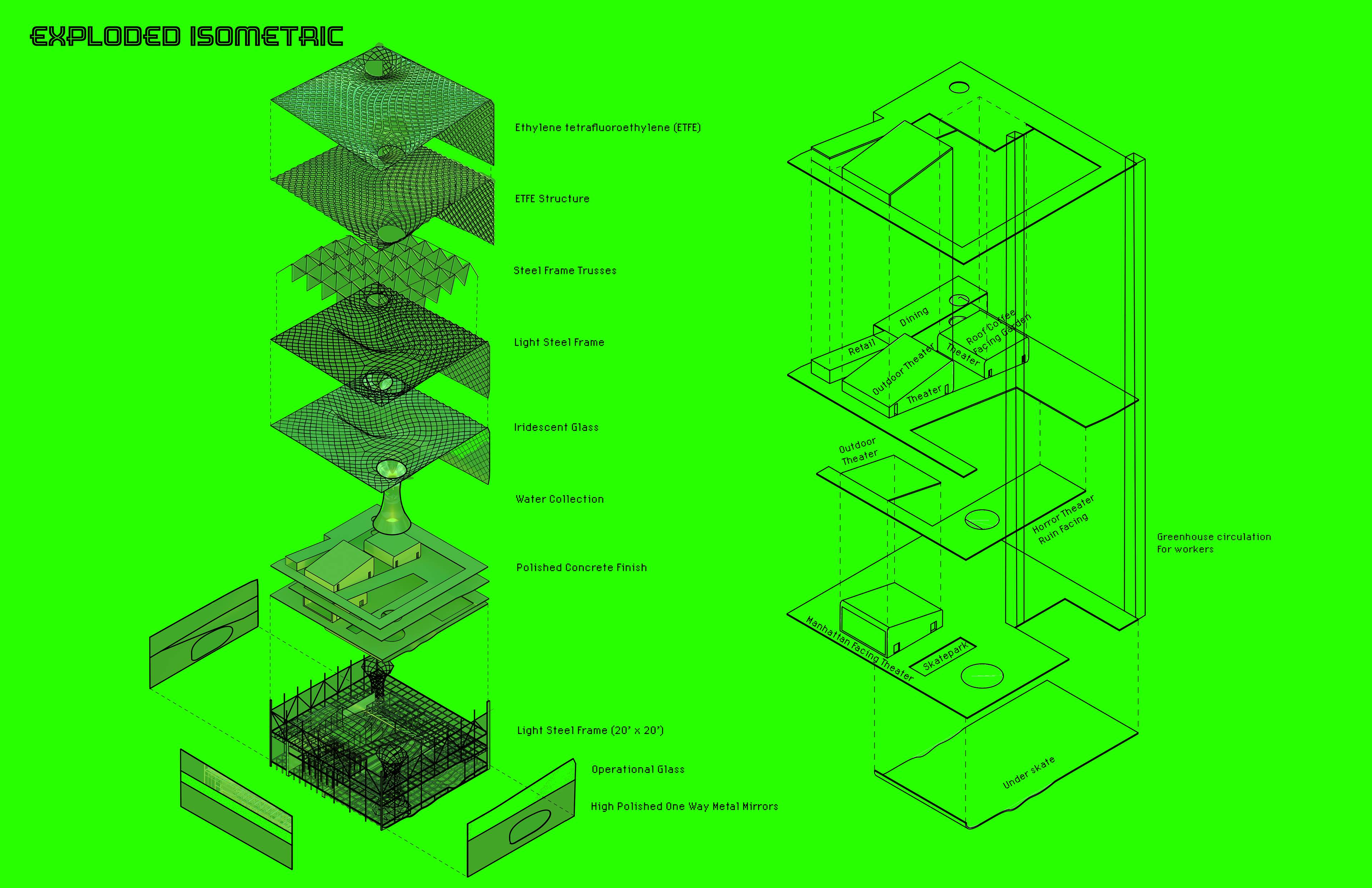
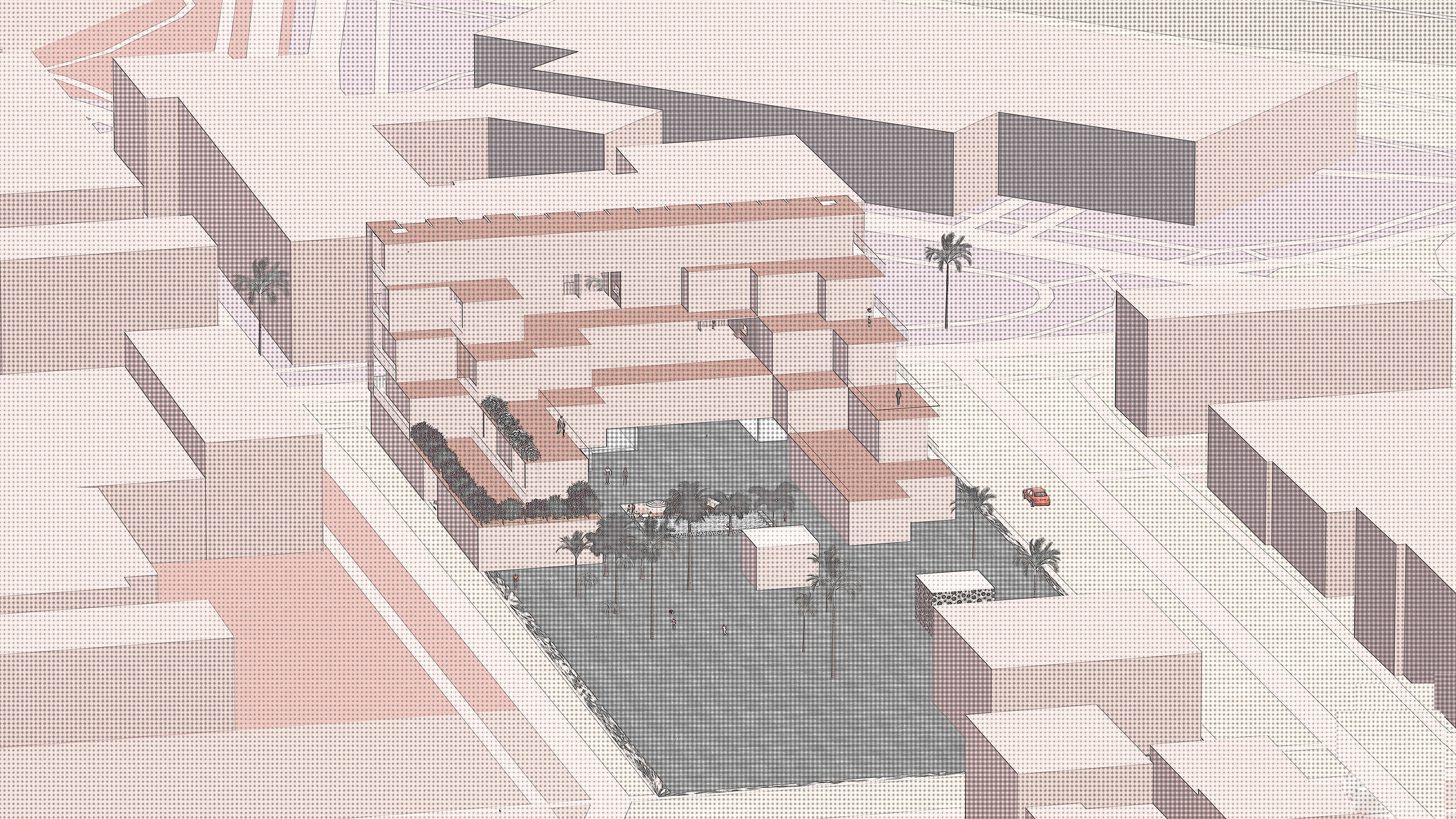
A hybrid approach to drafting is used in many of the technical drawings. Overlaying 2D technical drawings on top of 3D renders allows for materiality to be communicated along with structural details -- as seen in the exploded isometric to the left.
2D linework is generated in Rhino, and the geometry with the camera was exported to Blender for rendering.
Rendering for rapid prototyping
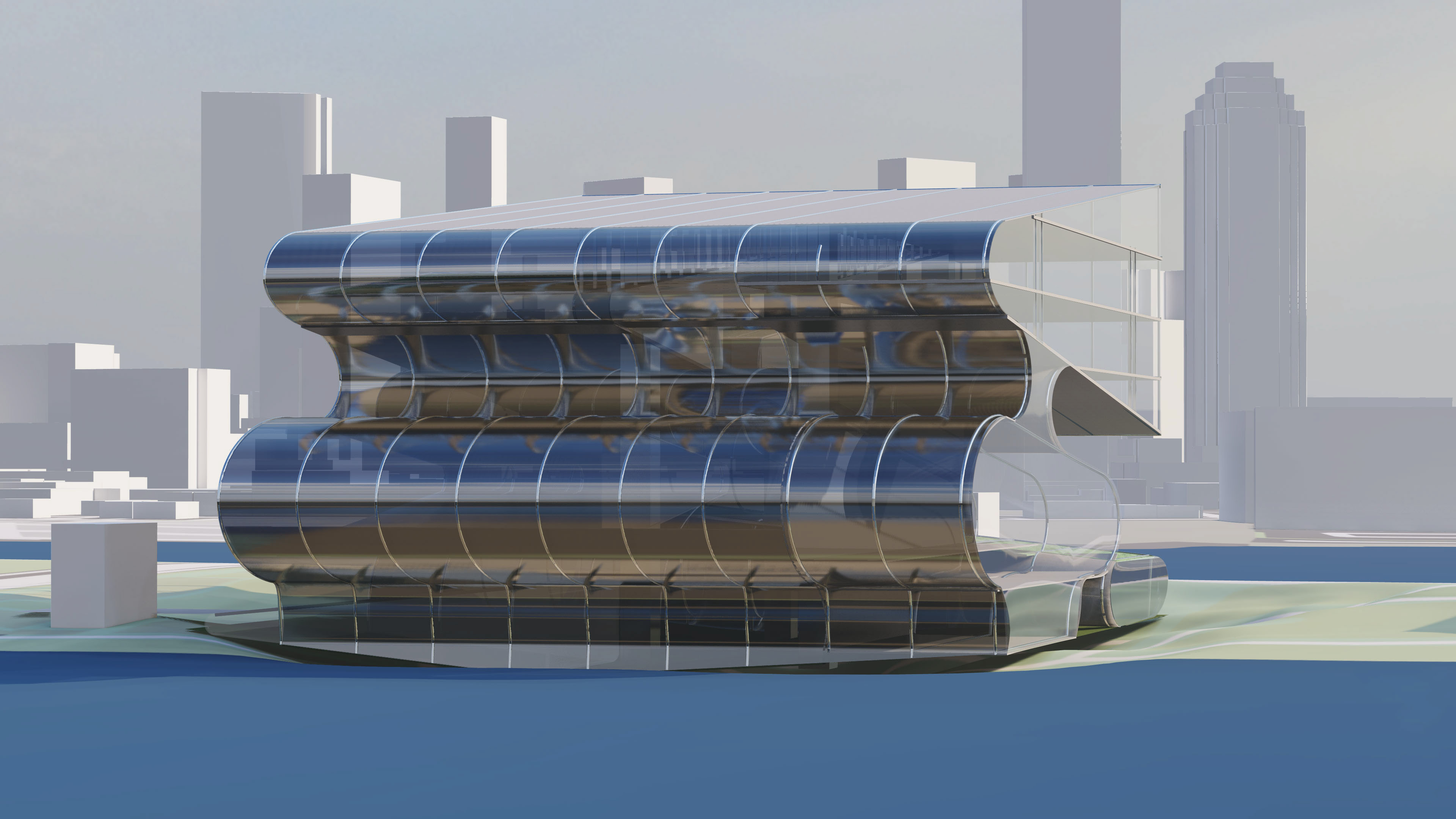
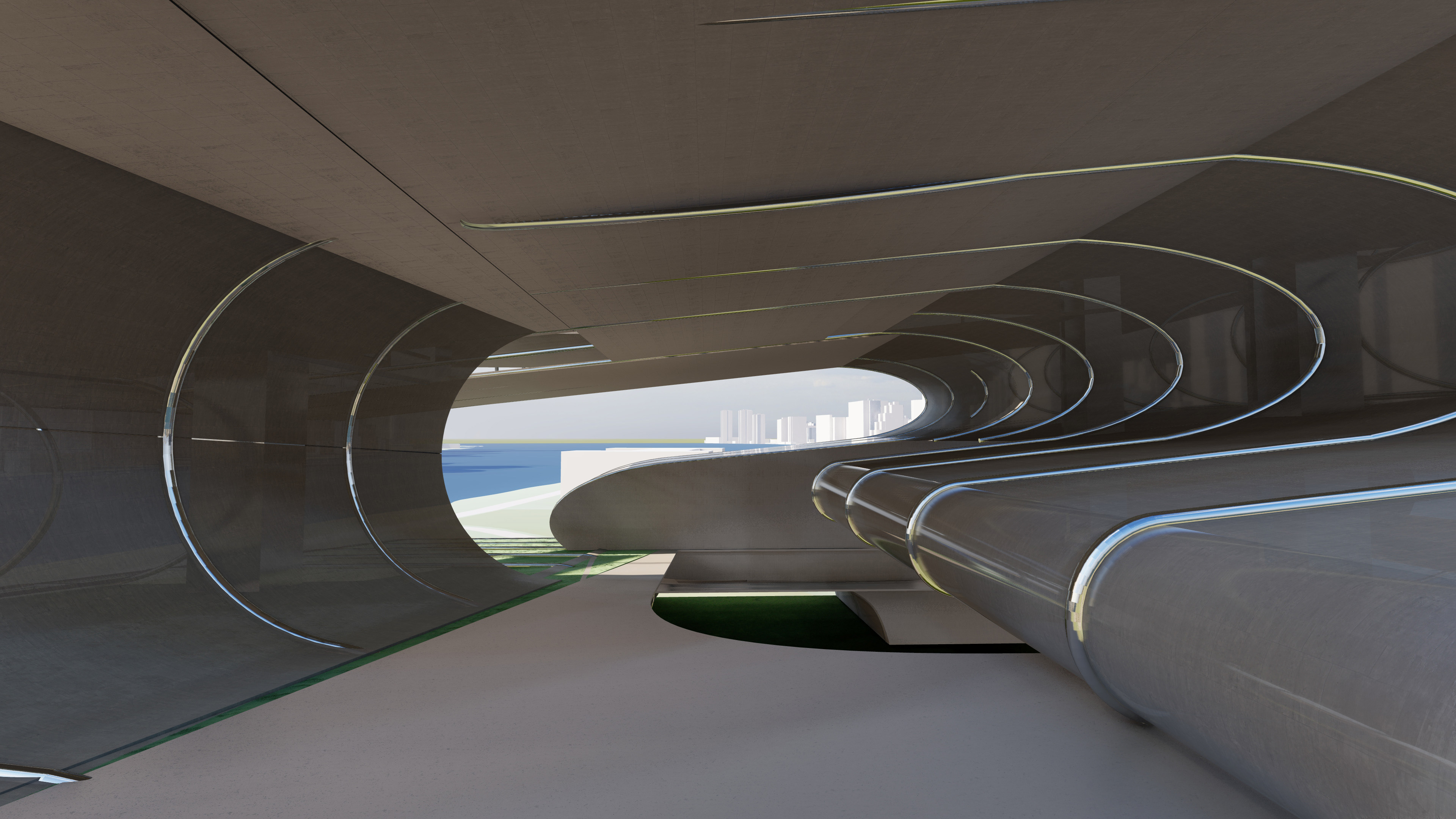
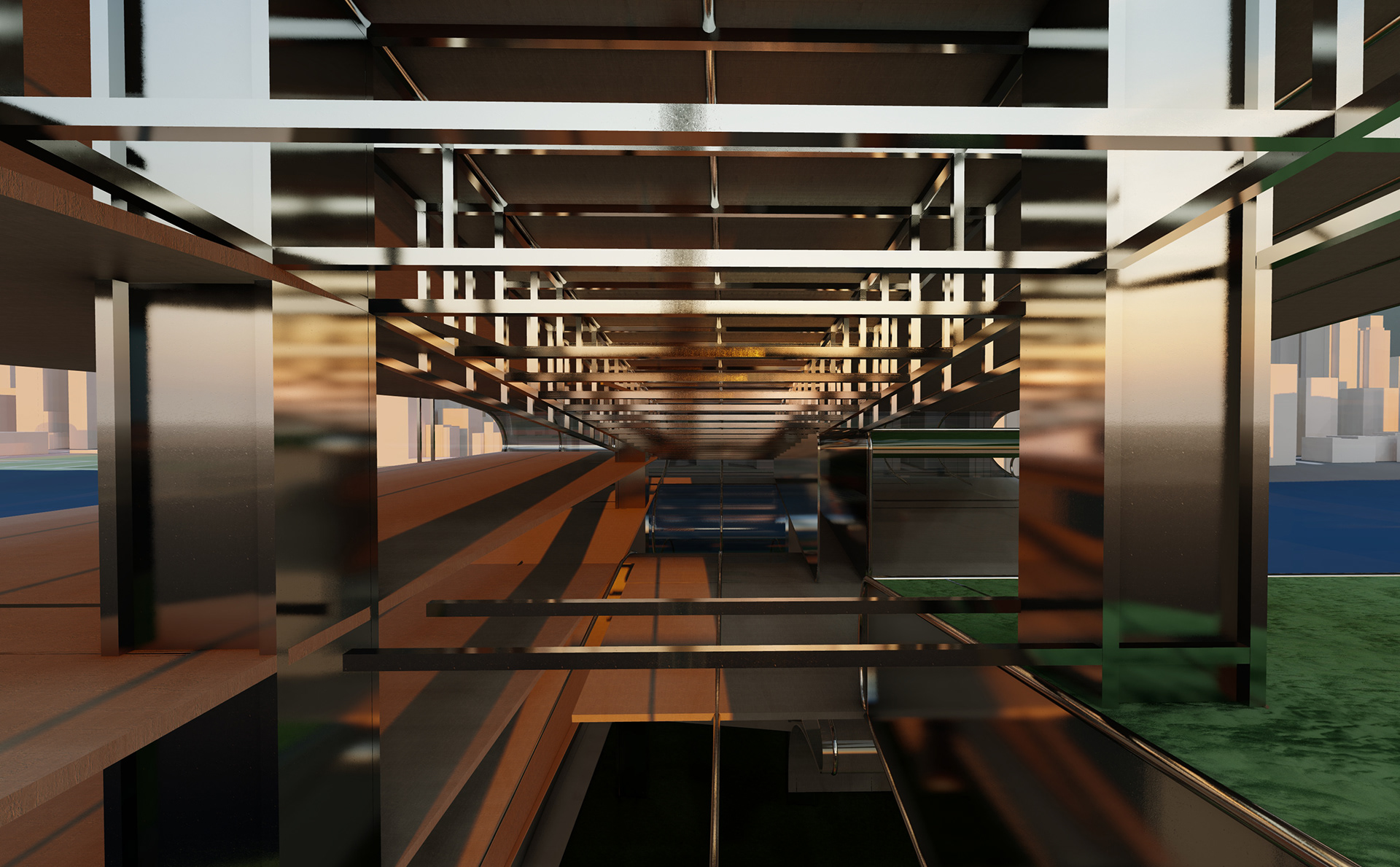
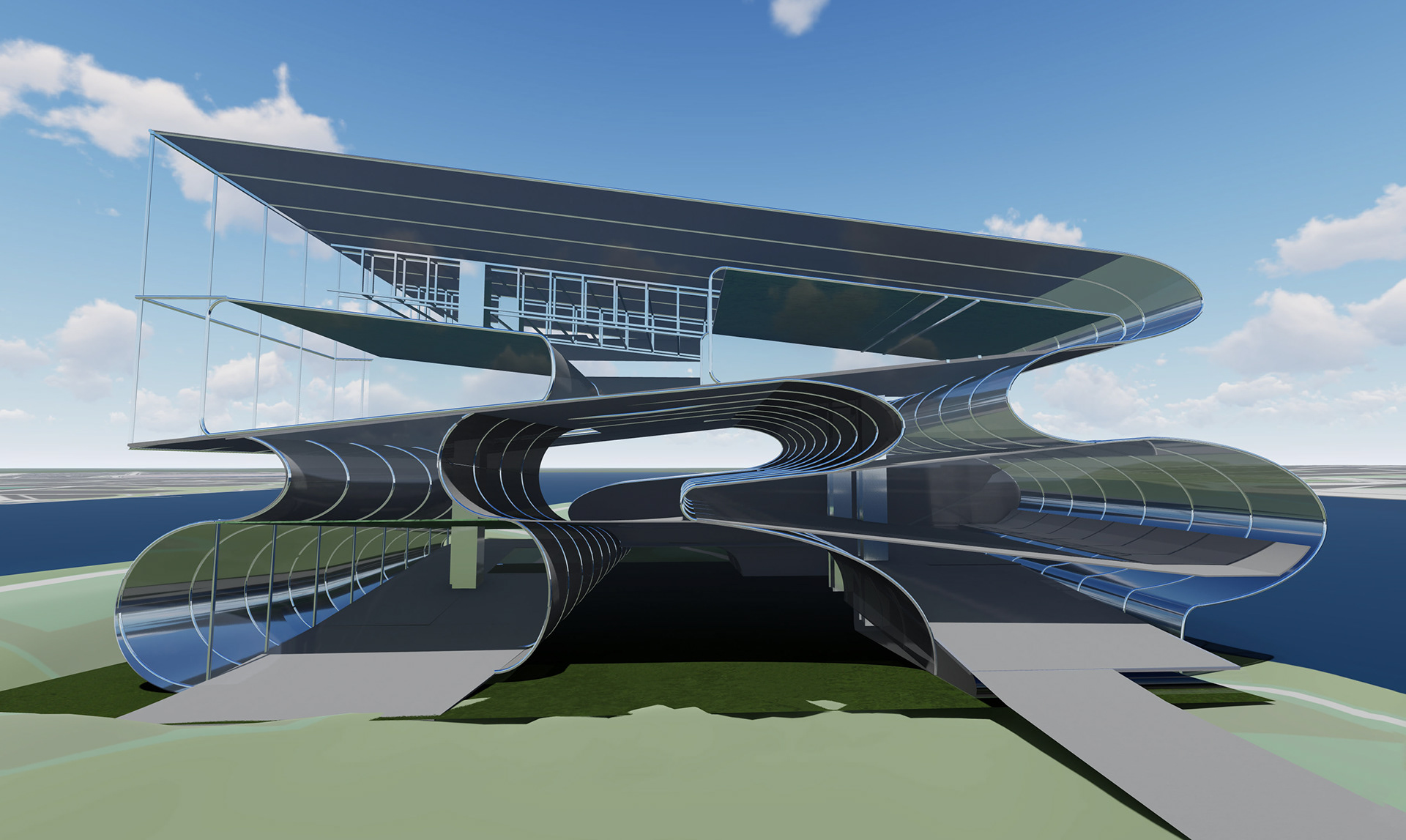
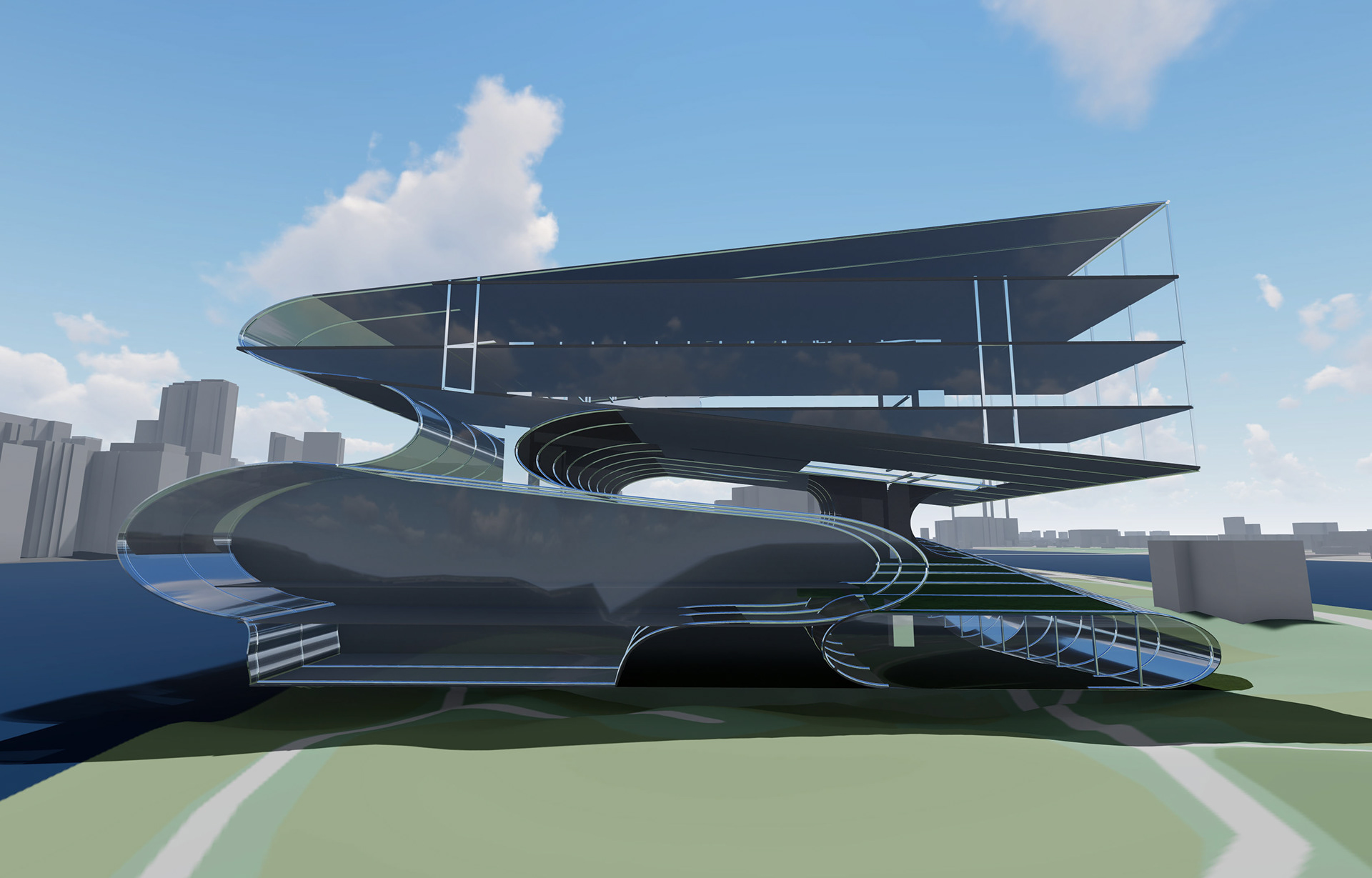
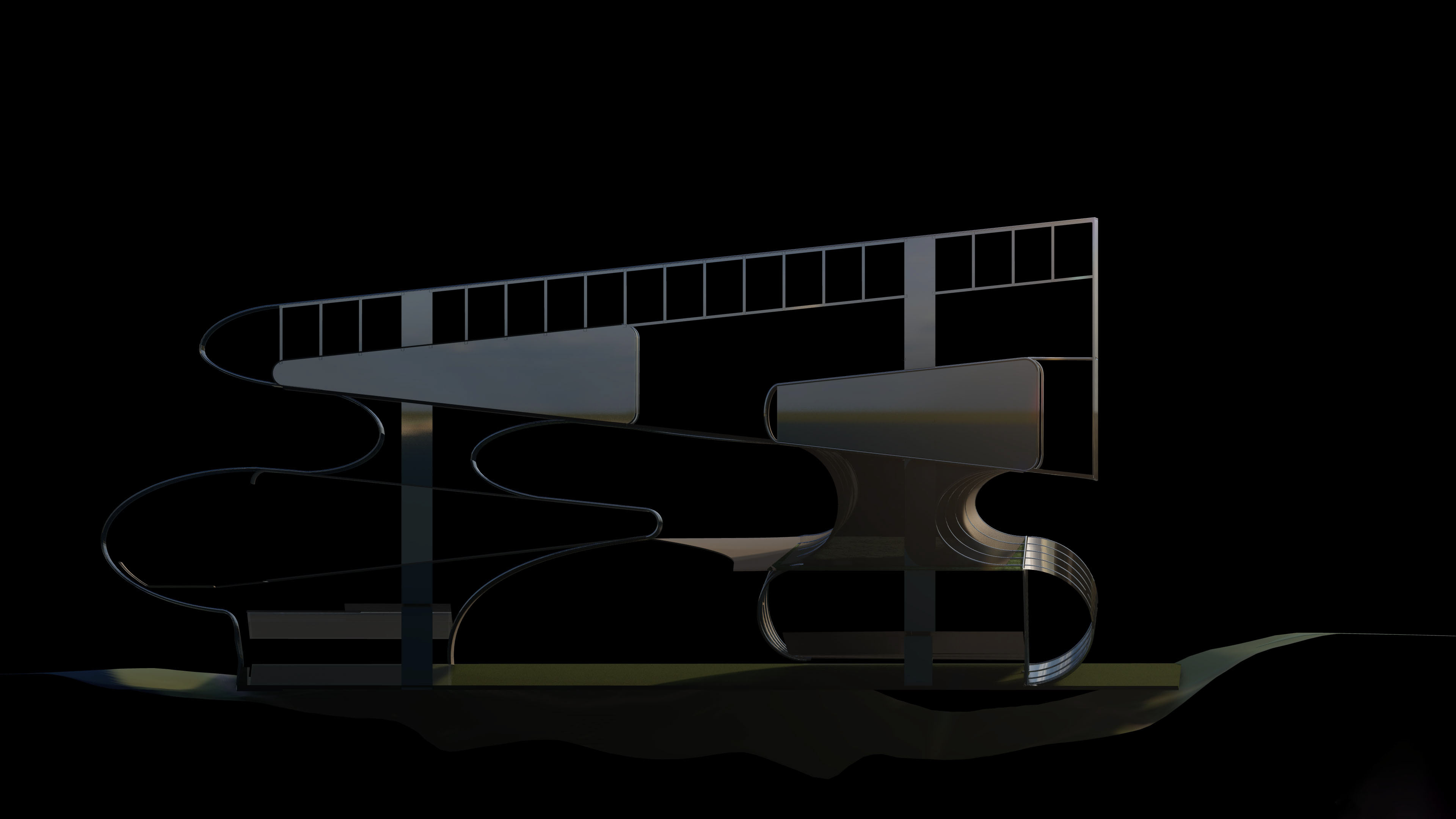
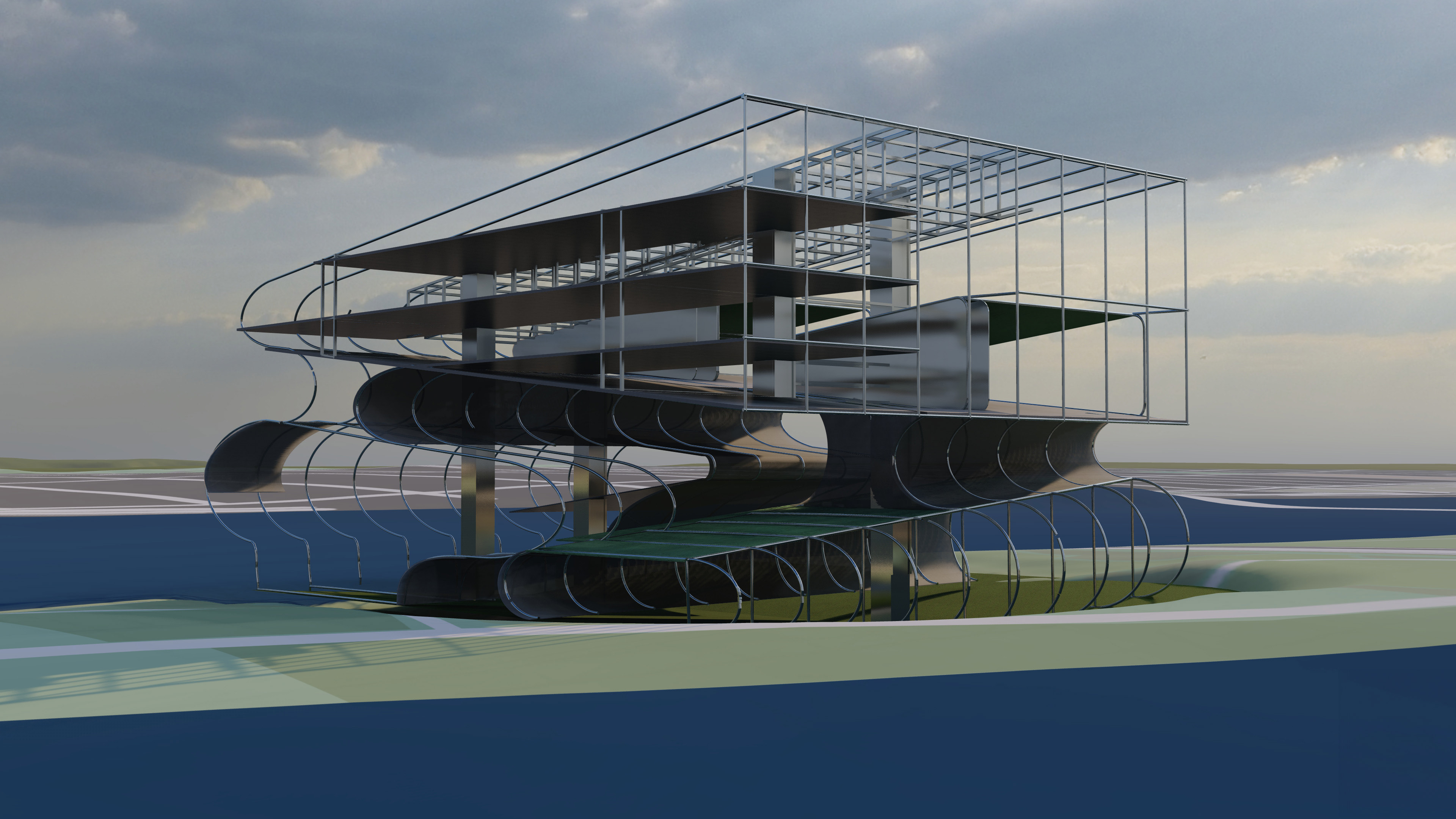
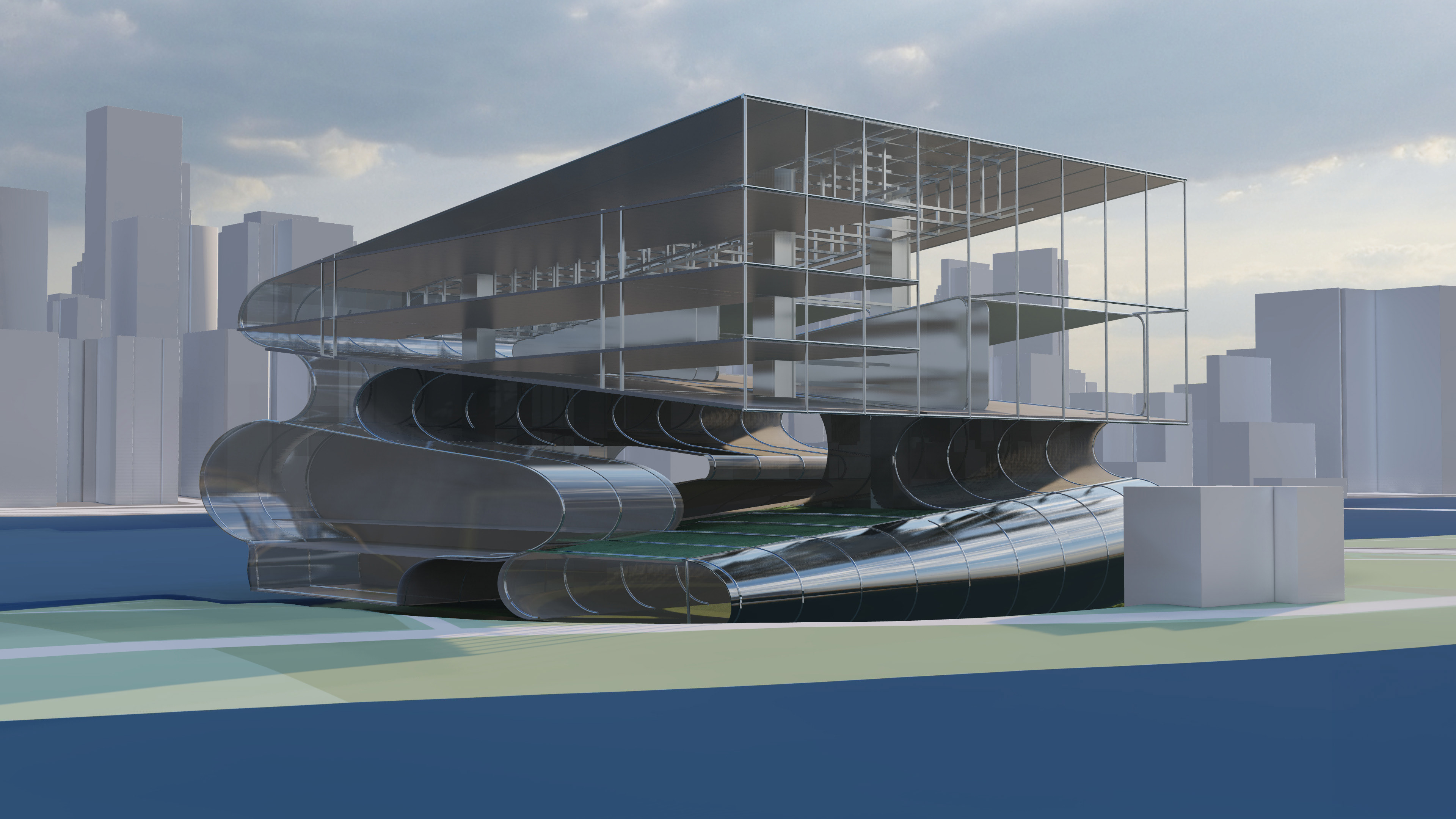
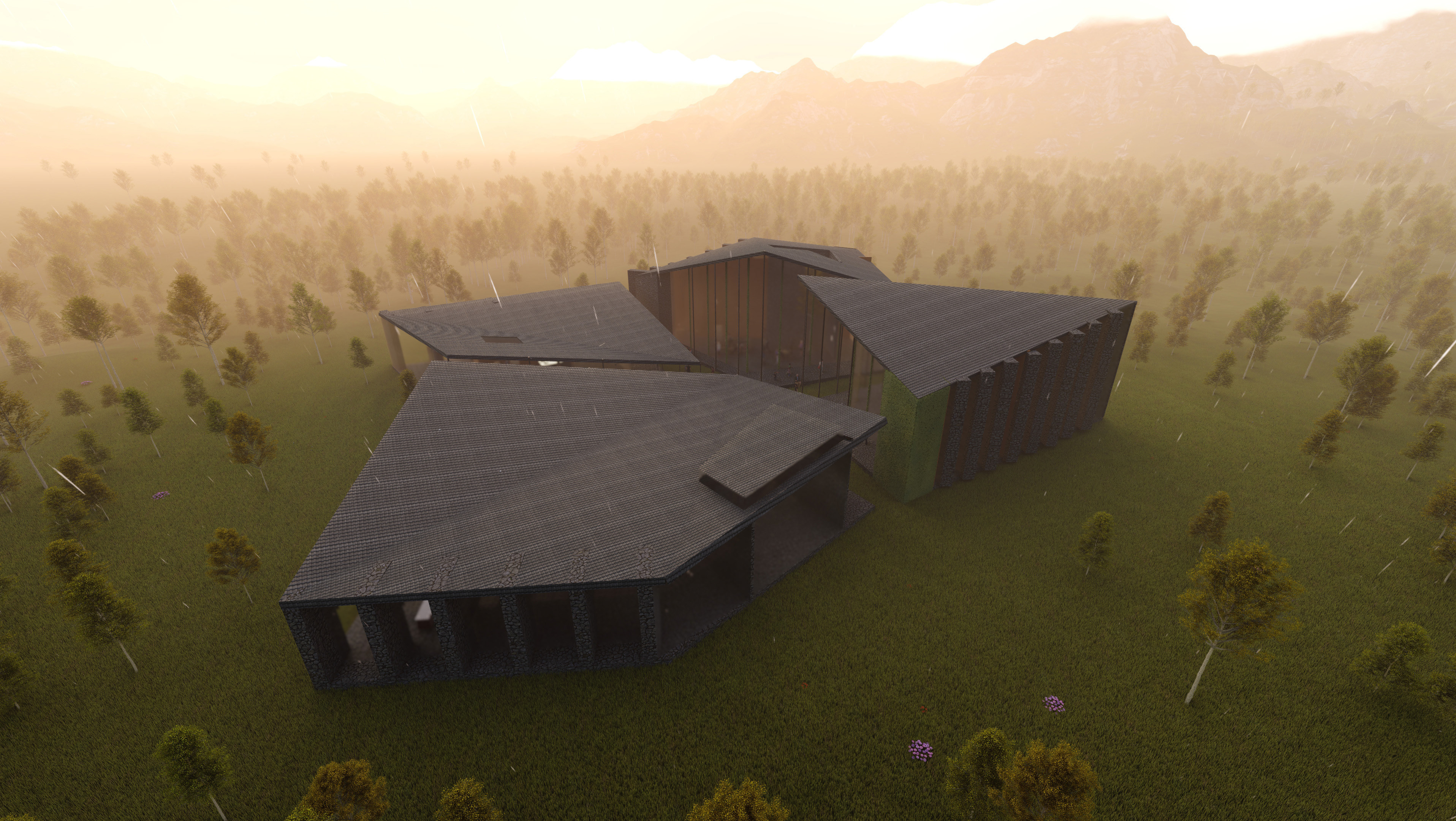
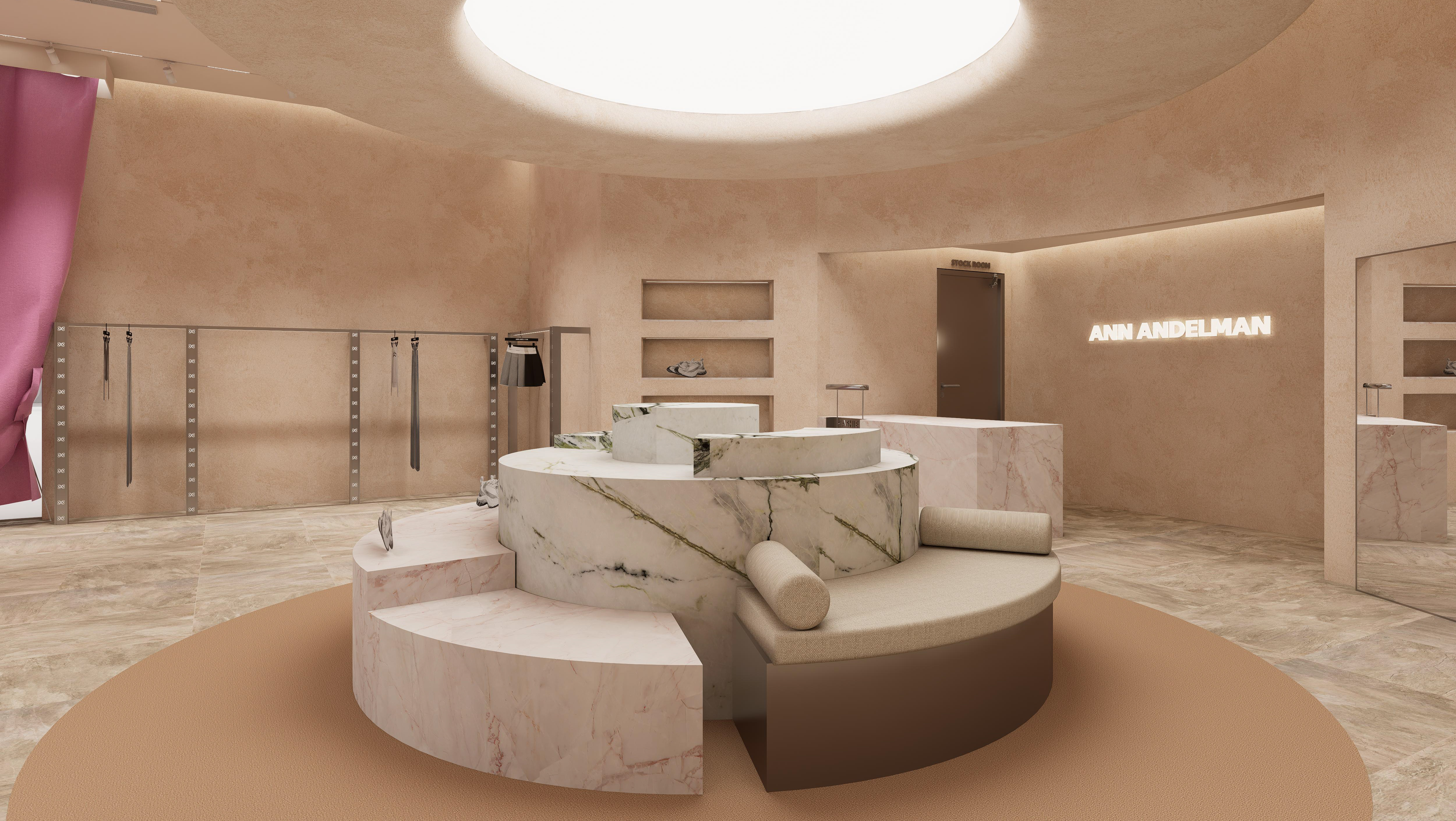
3D Rendering allowed me to ideate more quickly and in a more visually compelling way than traditional model-building.
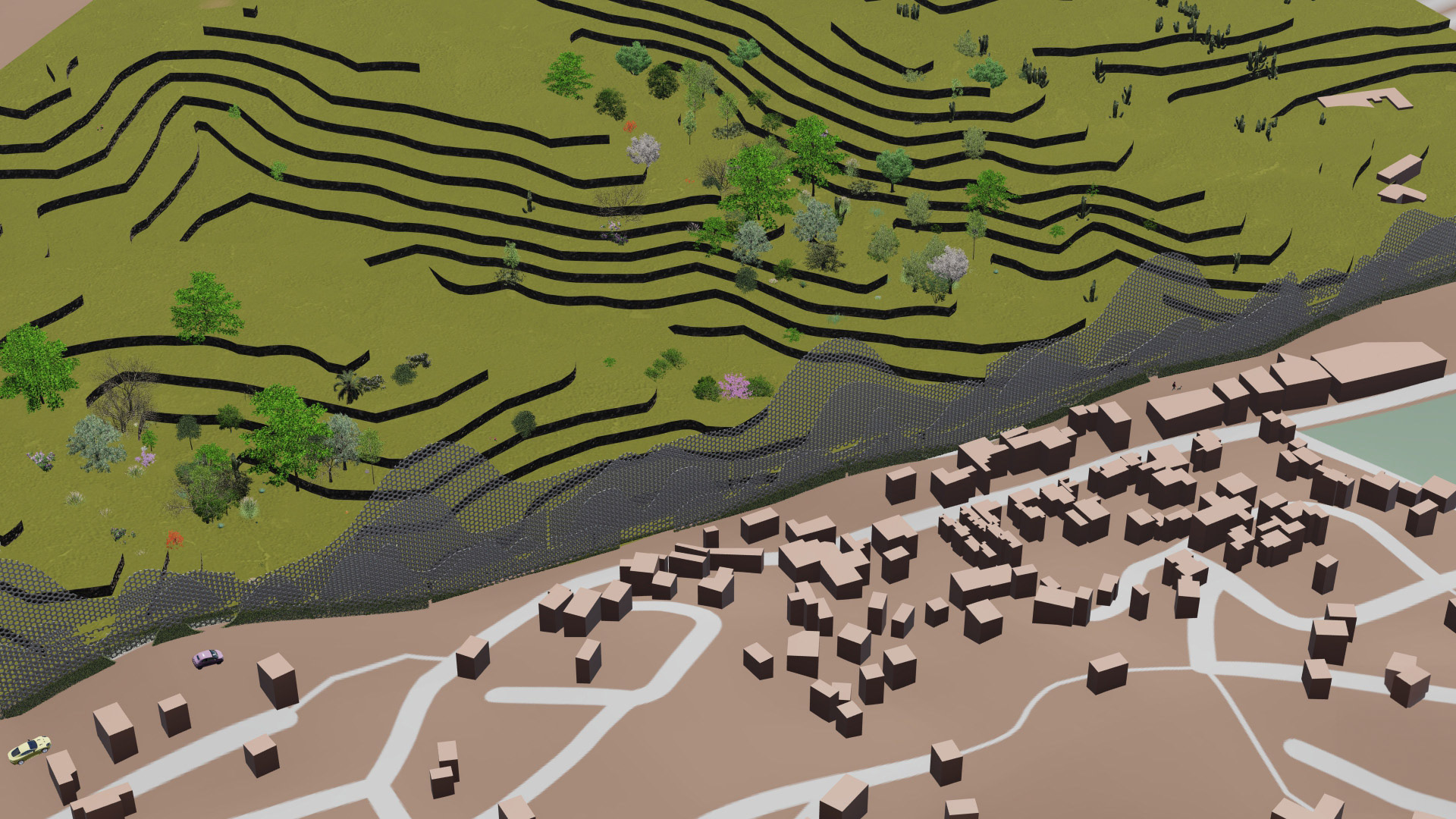
Rendering was used for both small-scale light studies and large explorations of form and structure.
Lumion was the primary render engine for these quick-fire renders due to its speed and live link with Rhino.