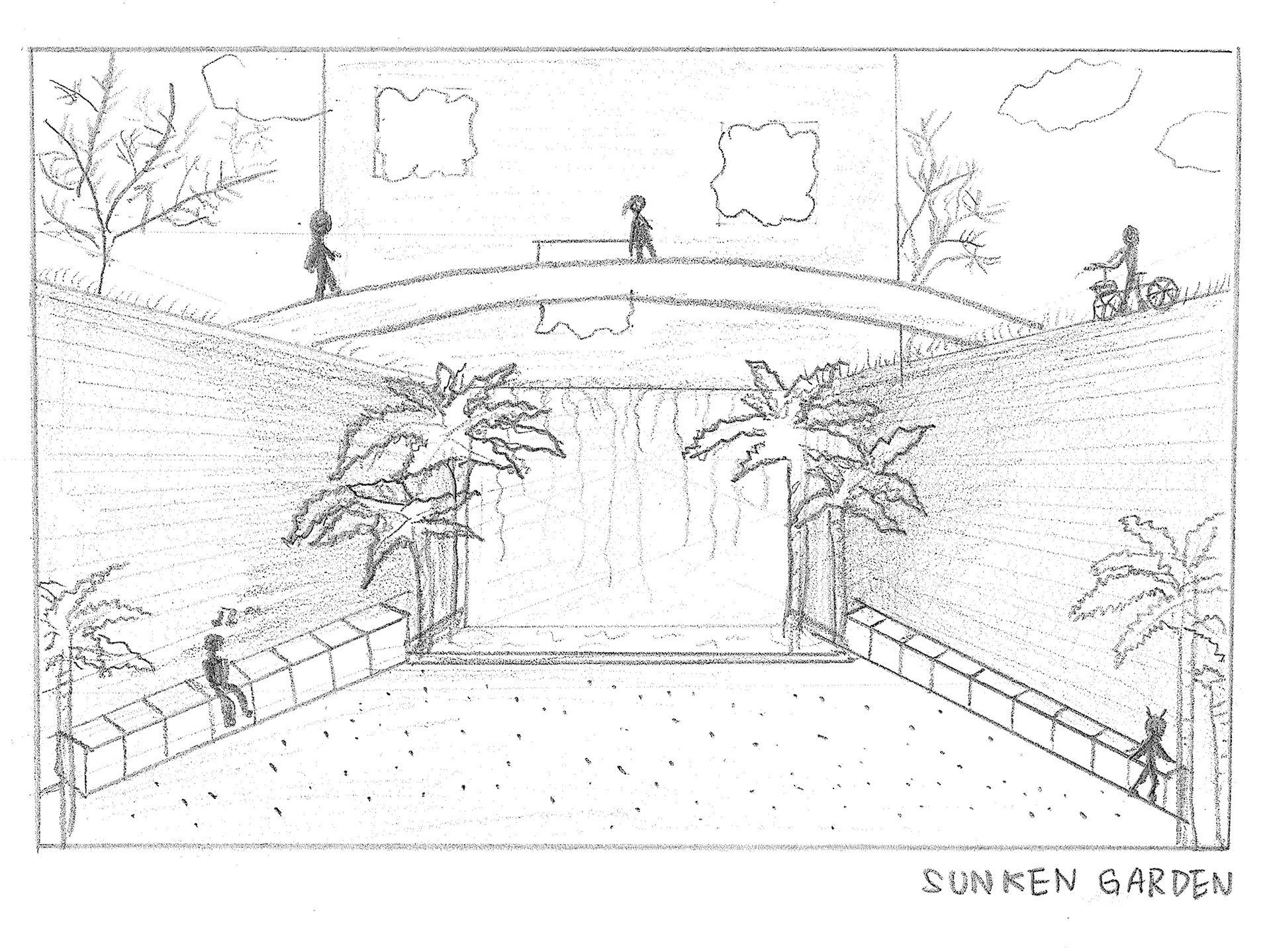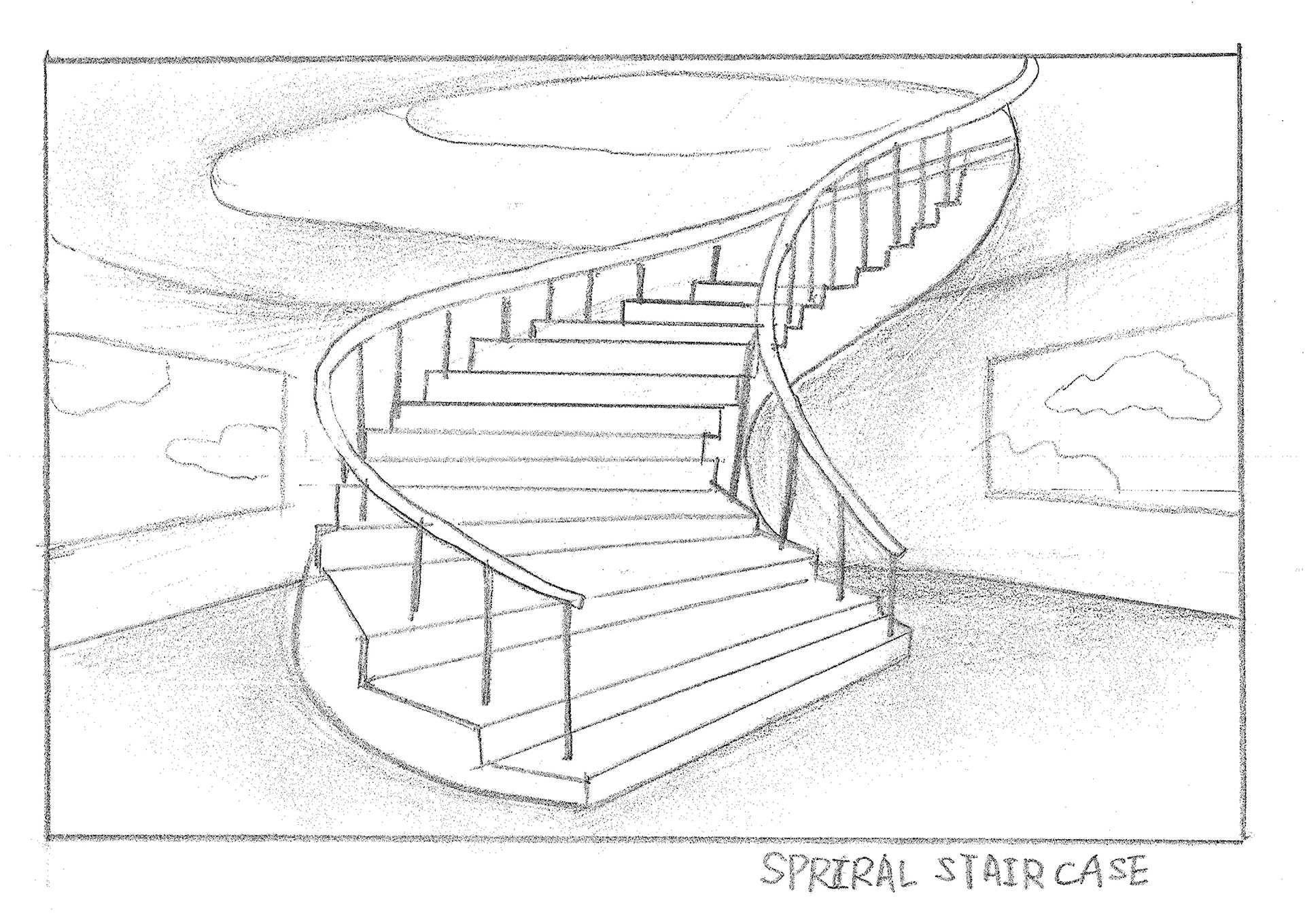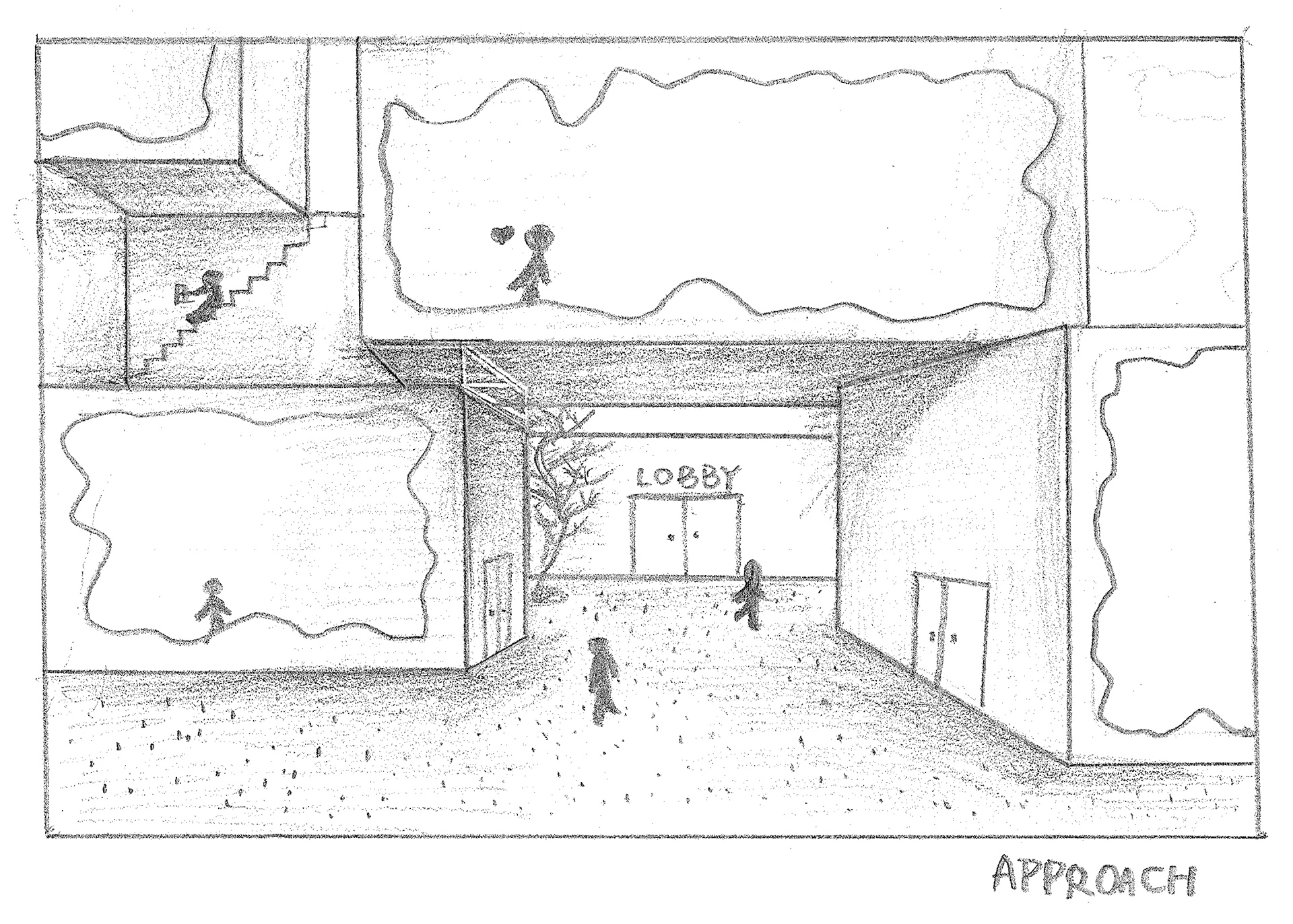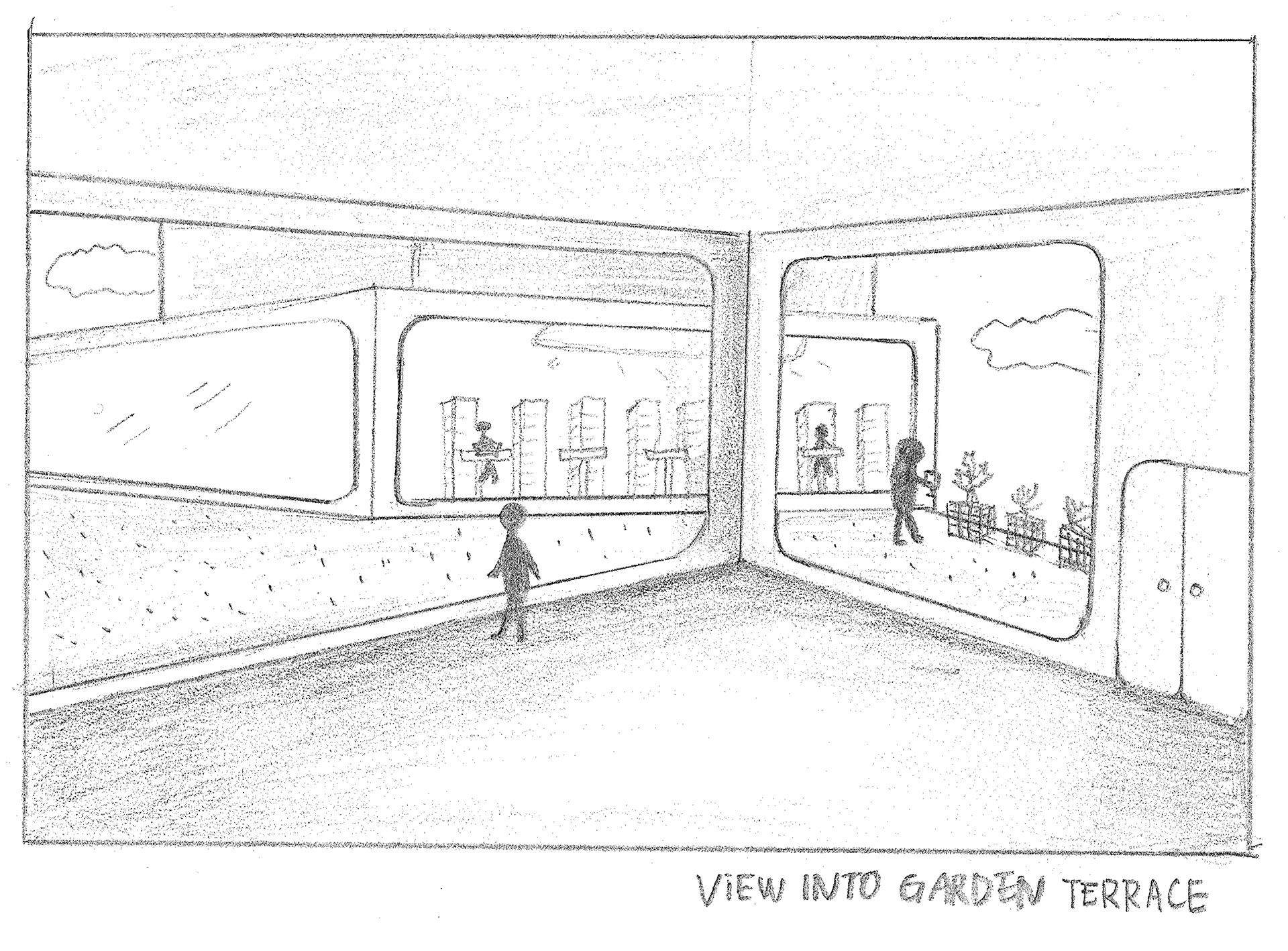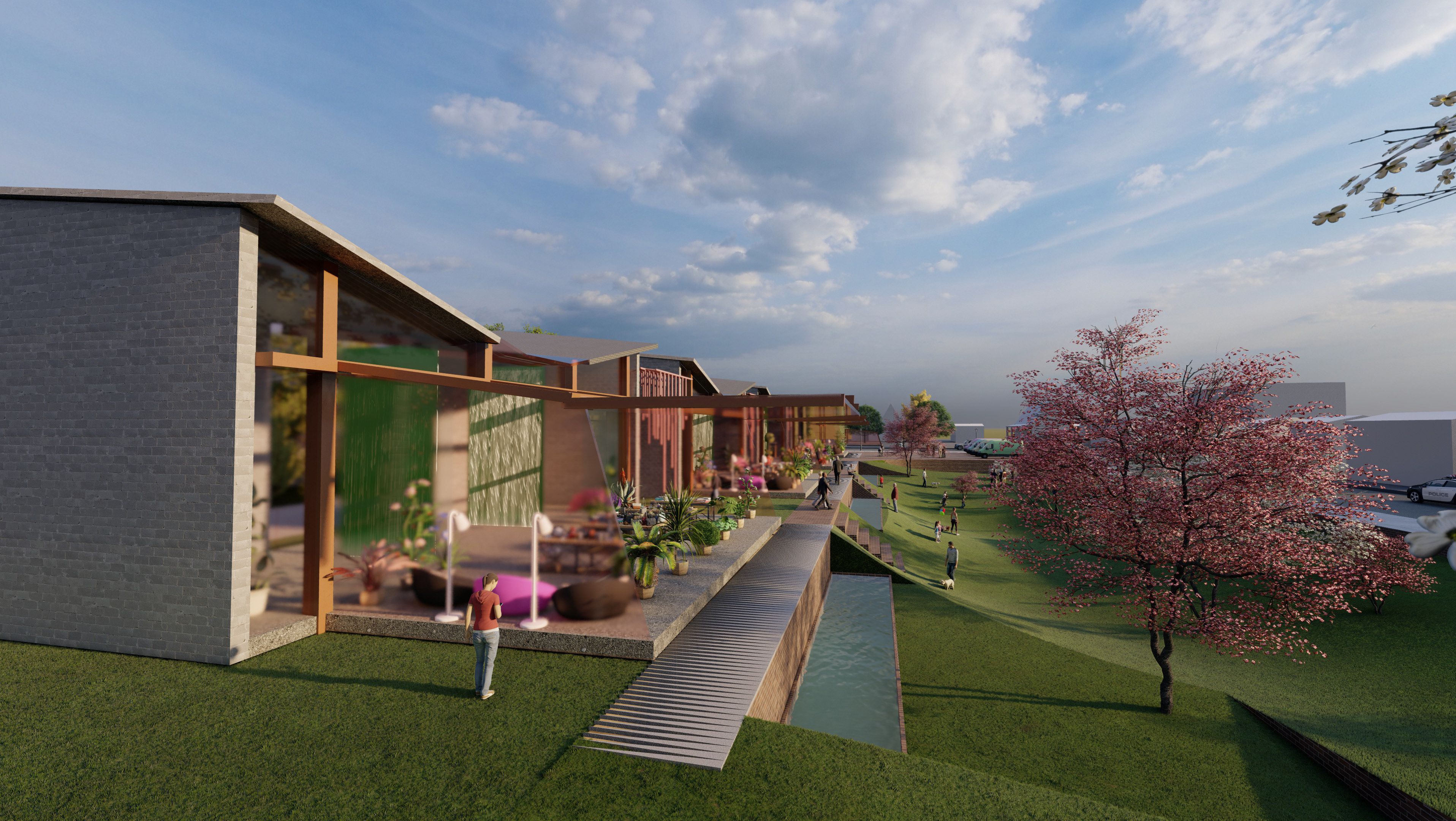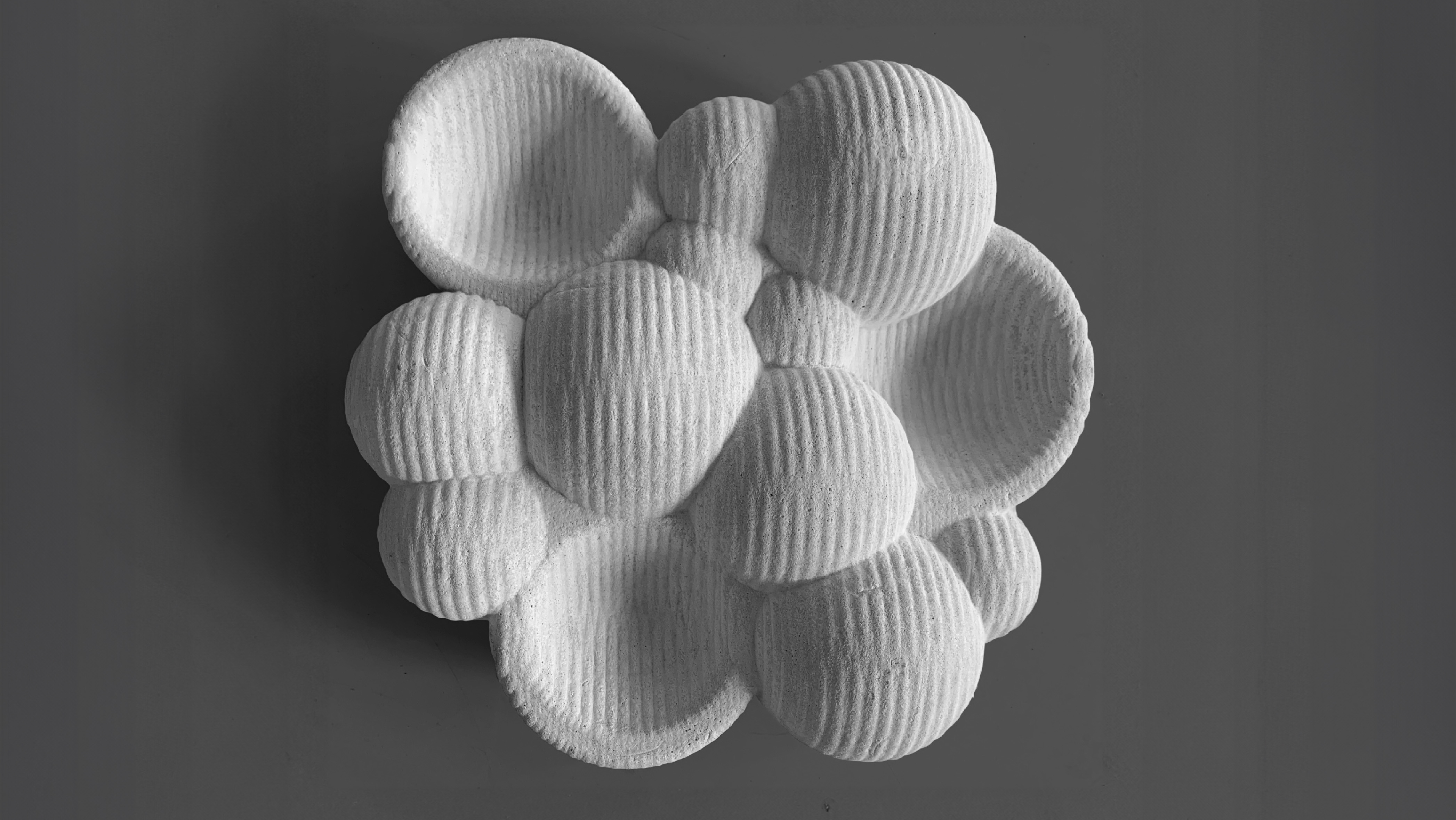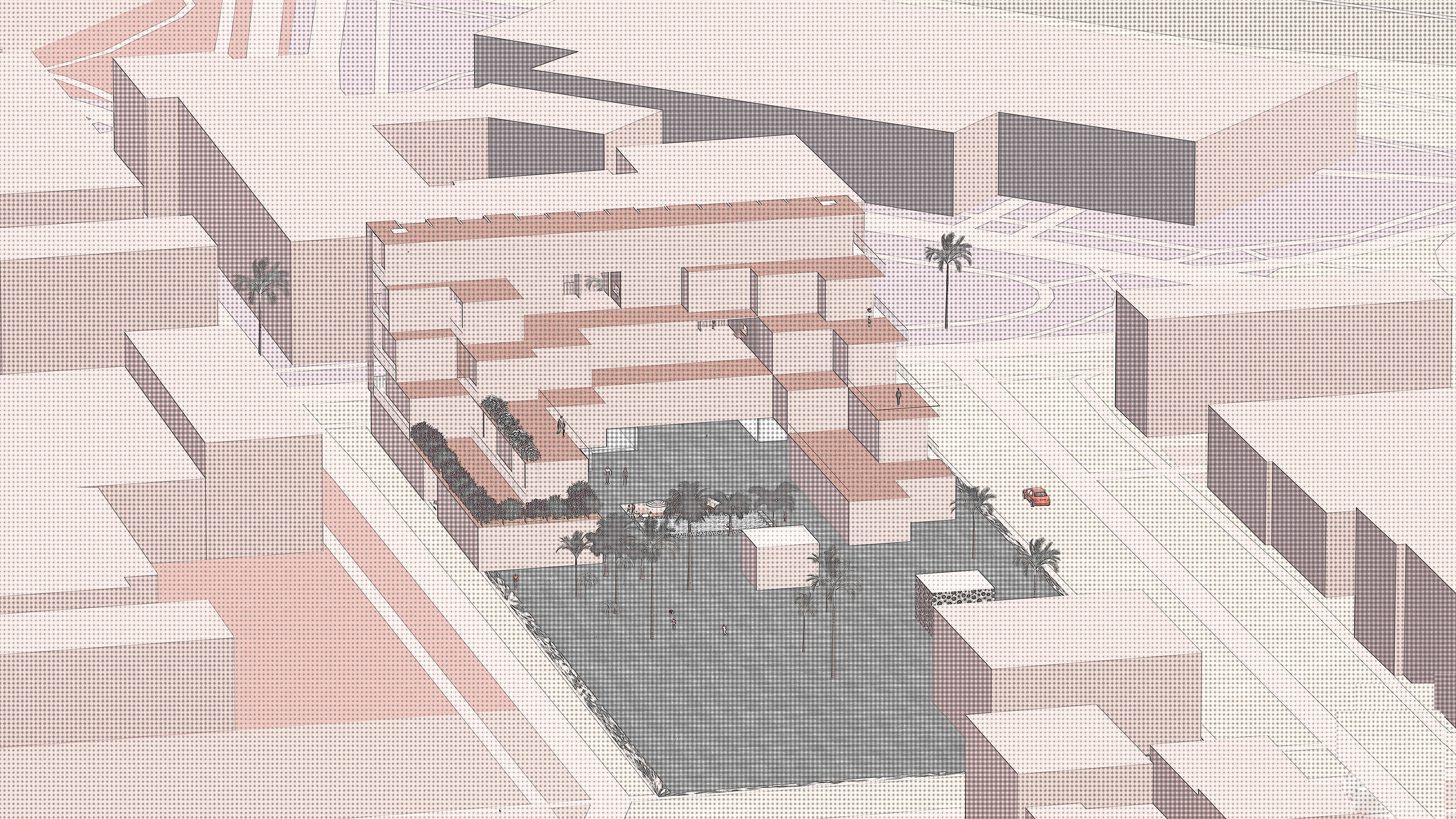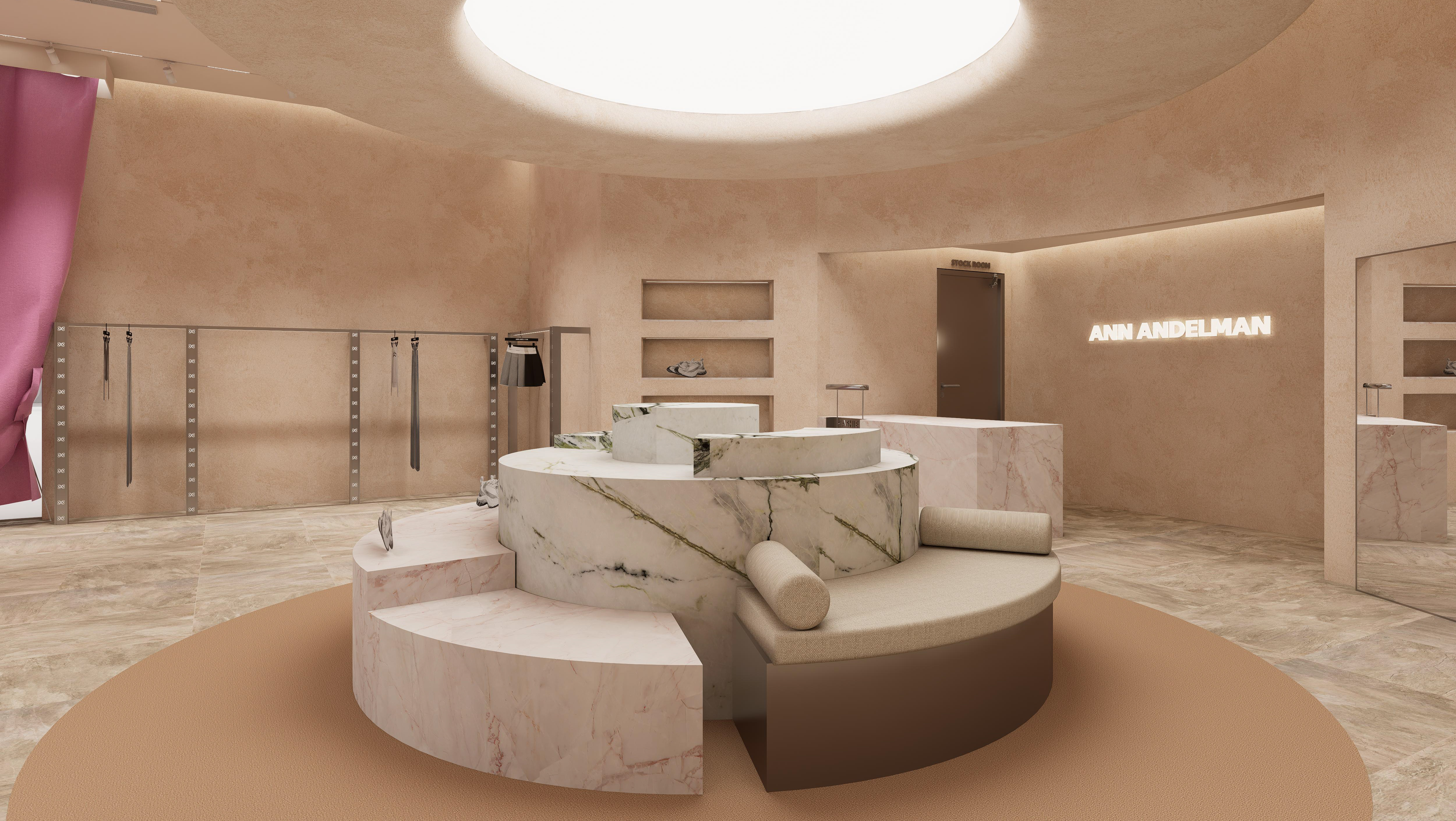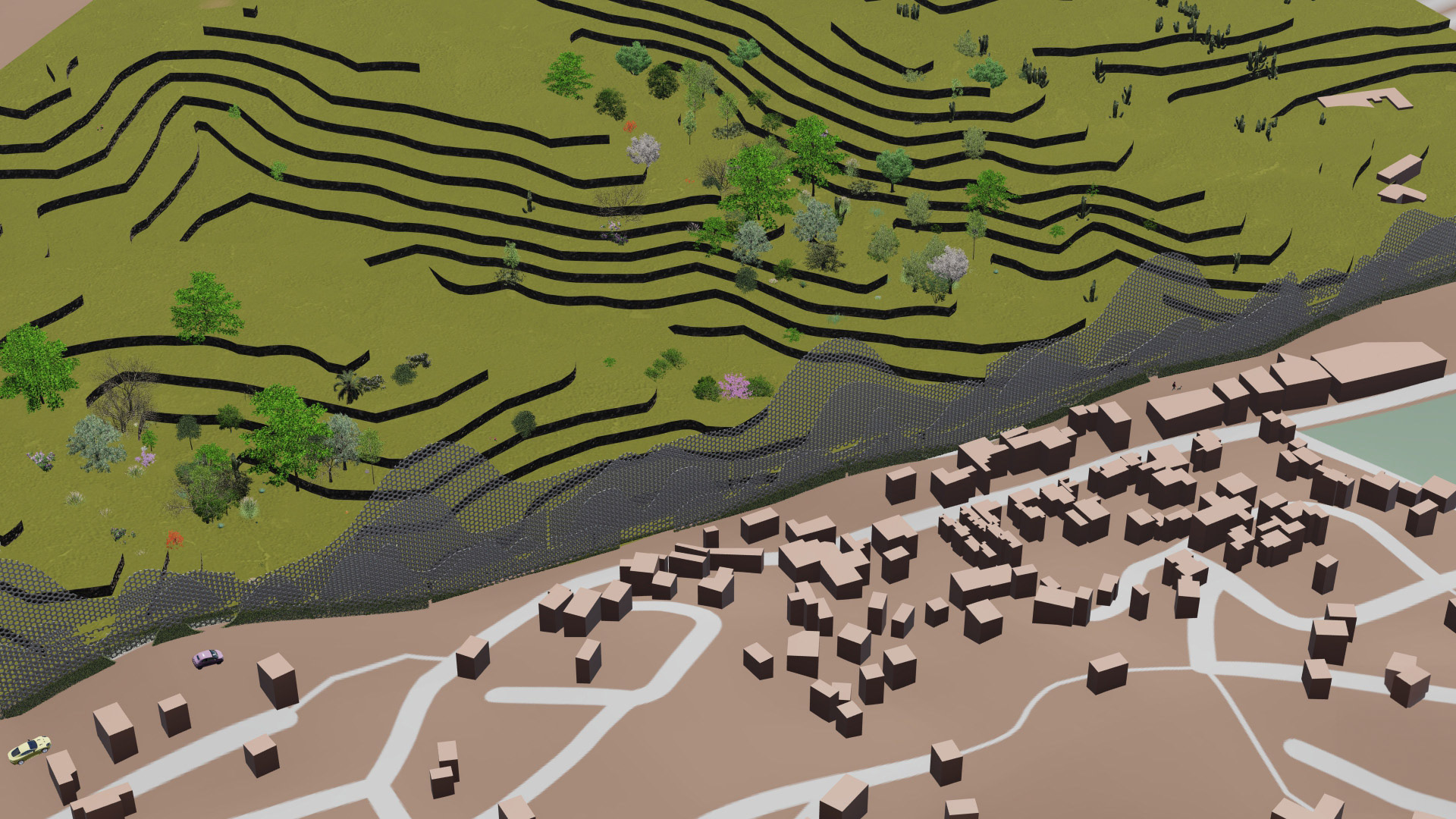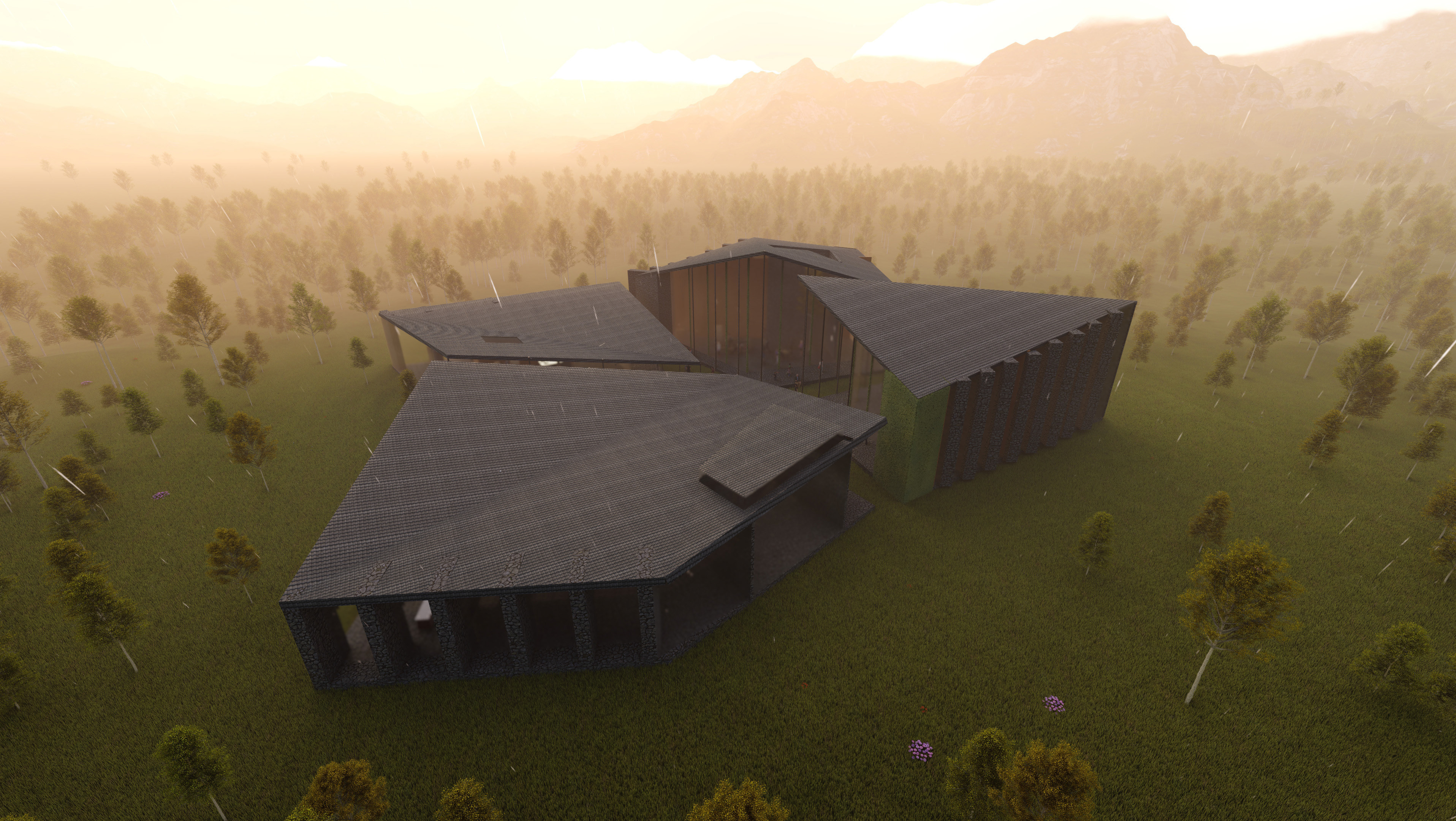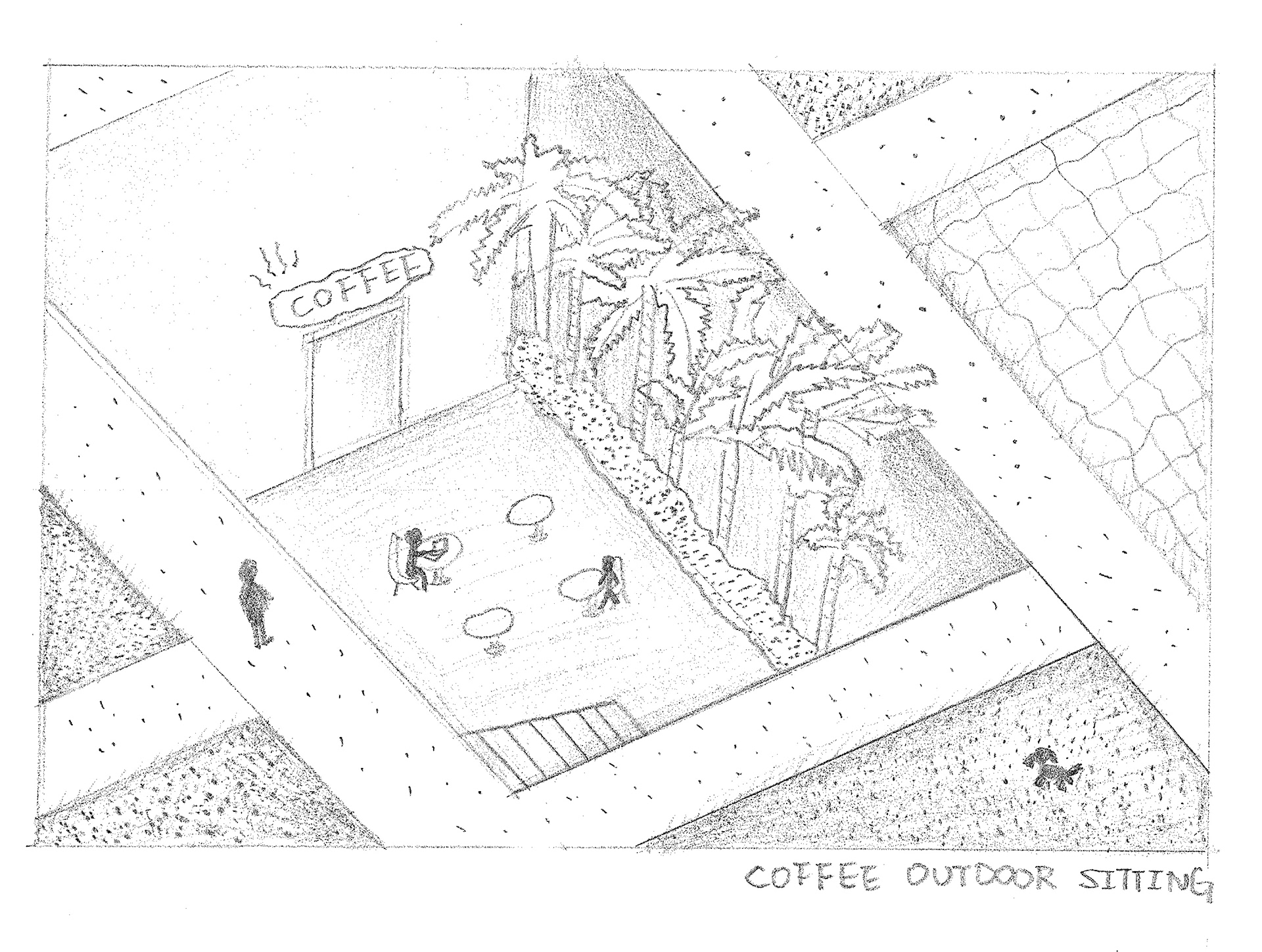
The inspiration for this building was using geometric forms to alter topography, pushing and pulling to create elevated and sunken spaces, creating unique moments both inside and outside the building.
The CiC should serve as a lesson on sustainability, being the most environmentally
efficient building on campus. The performance of the CiC should be as striking and innovative as the outward appearance.
efficient building on campus. The performance of the CiC should be as striking and innovative as the outward appearance.
Rendering for analysis -- Using revit to generate luminocity studies at various times of day to inform lighting decisions
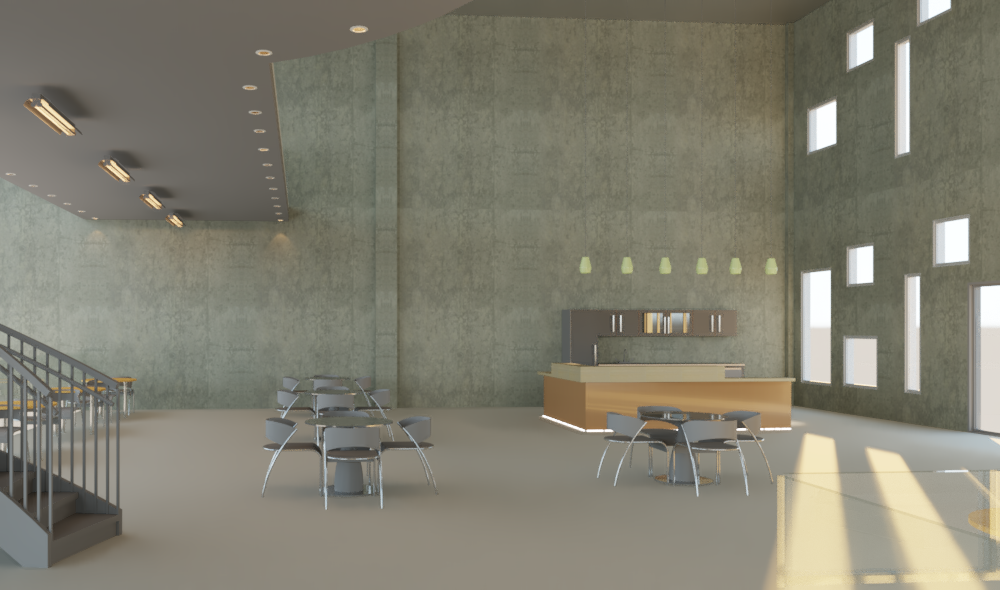
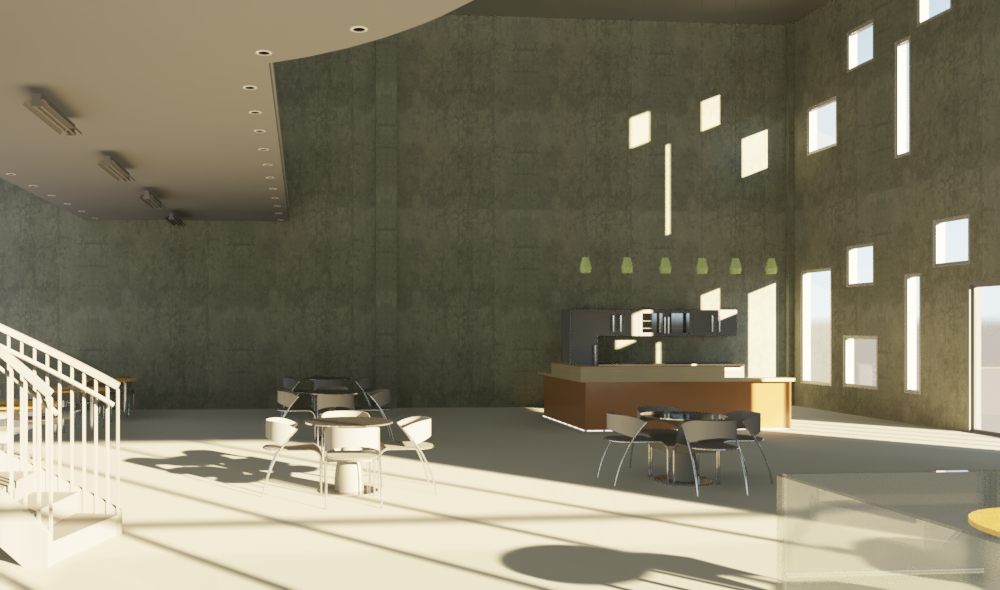
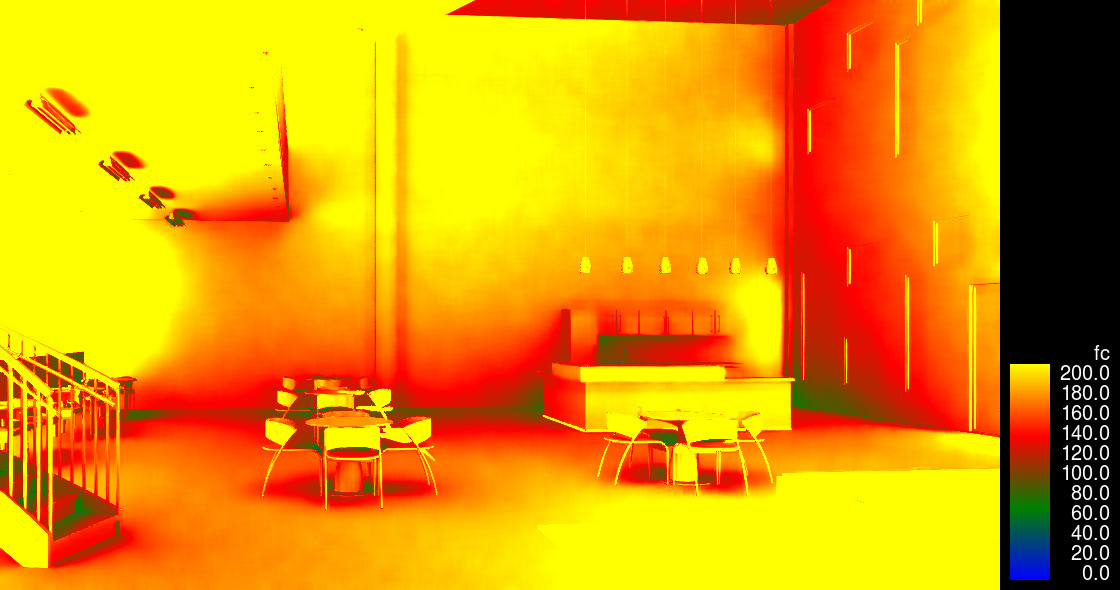
analyitical renders, while not suitable for final project communicaton, hold incredible inisght during the design phase
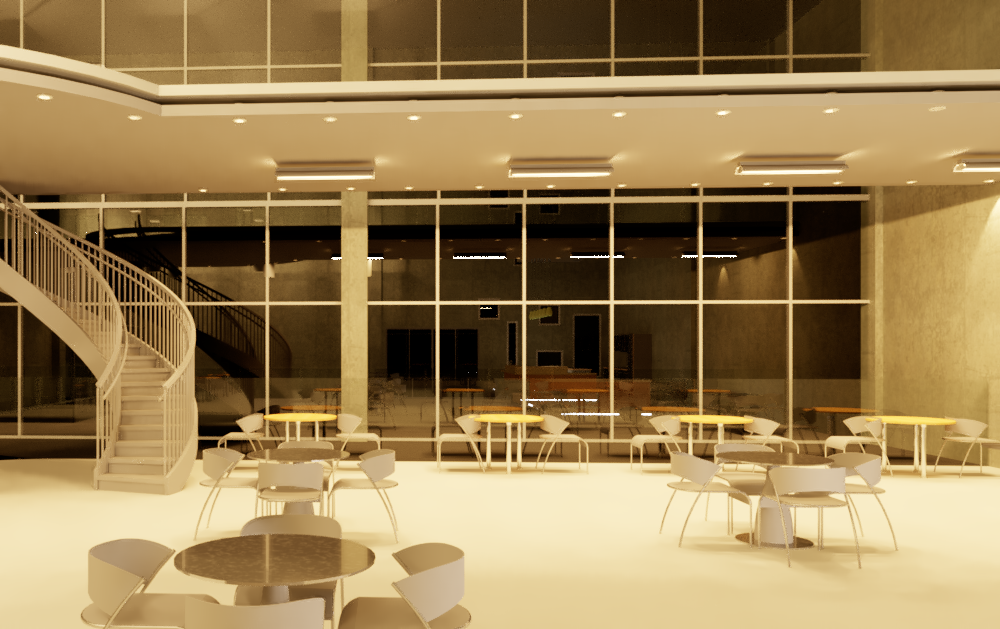
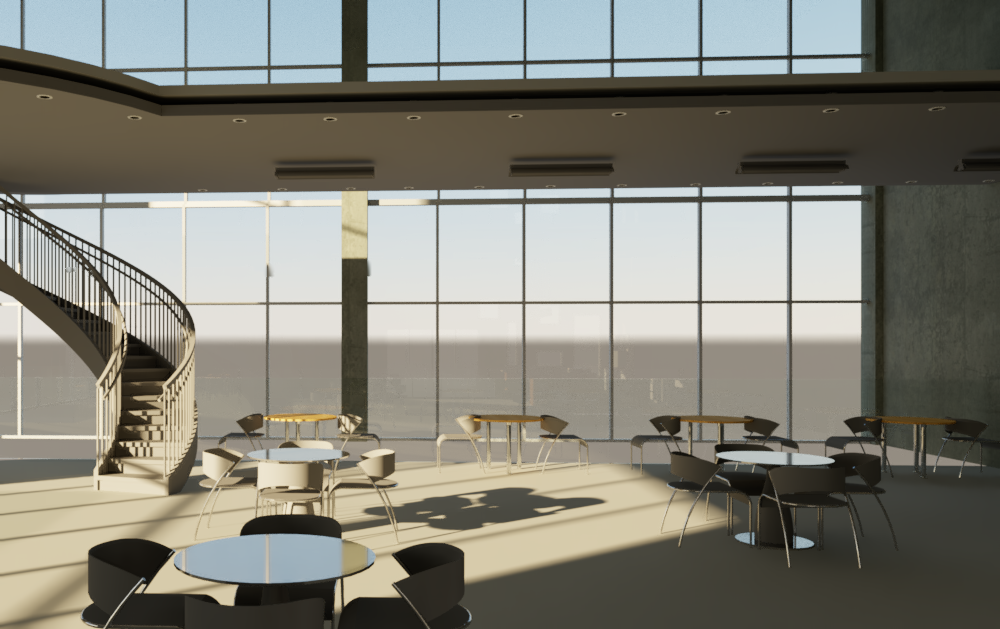
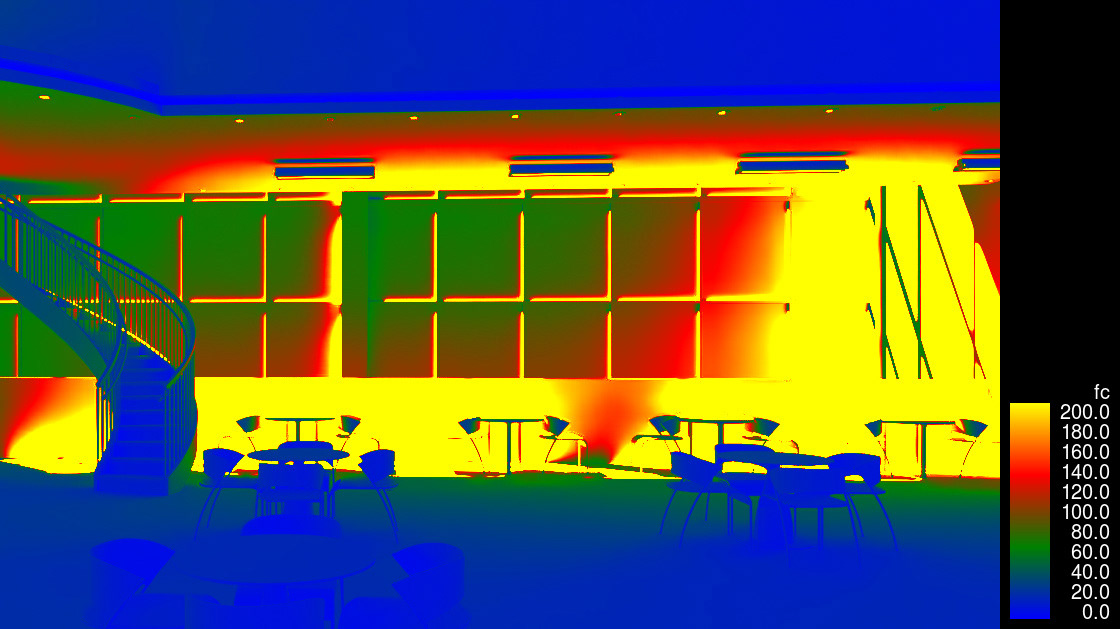
The results of this experiment are spaces that are both intriguing to the eye and maximize passive efficiency.
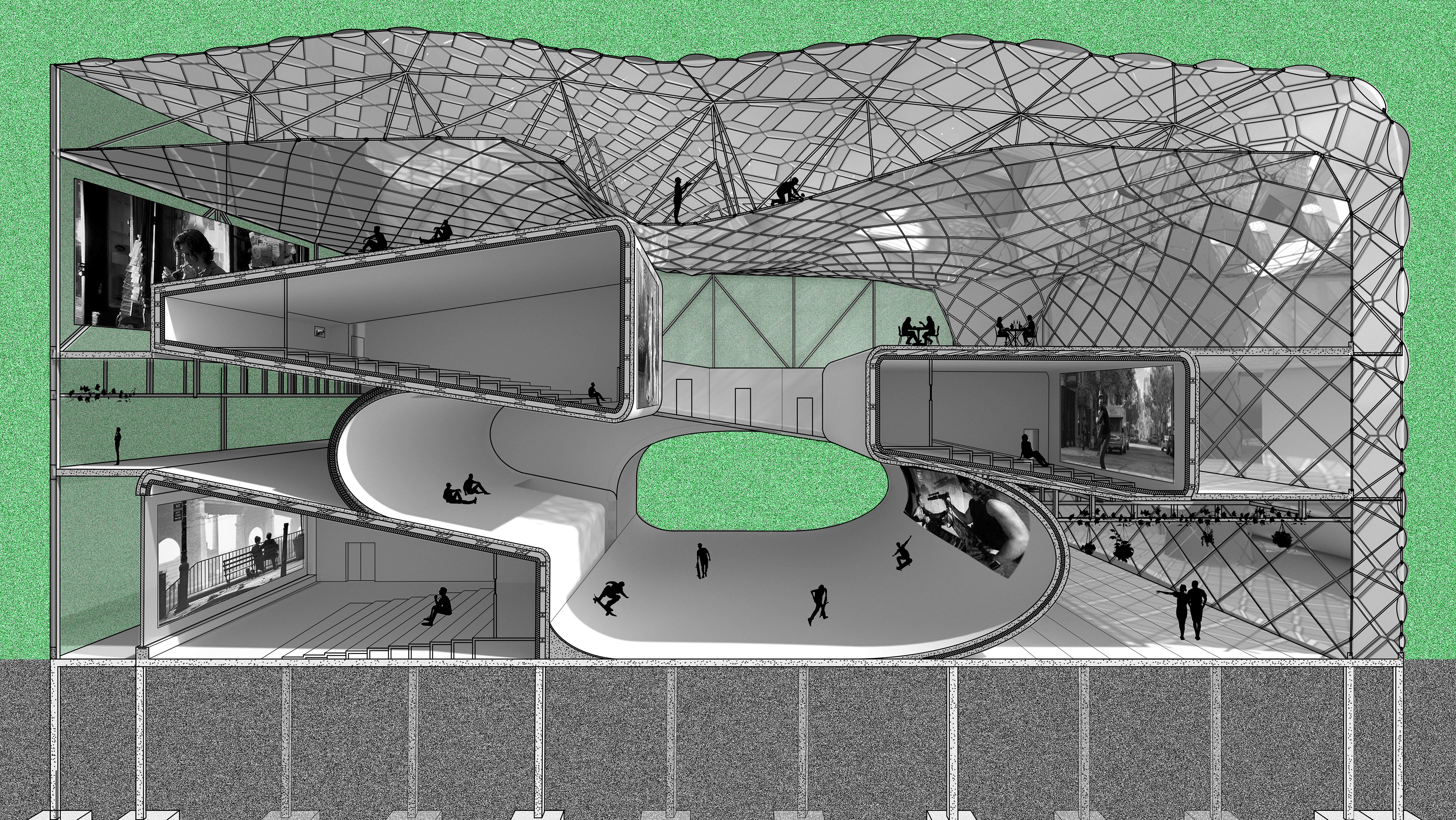
The geometric shapes move into the ground, allowing the building to utilize thermal cooling and water collection abilities innate to sub terrainian spaces.
Large vertical spaces allow for heat to travel upwards, eventually expelled through the top
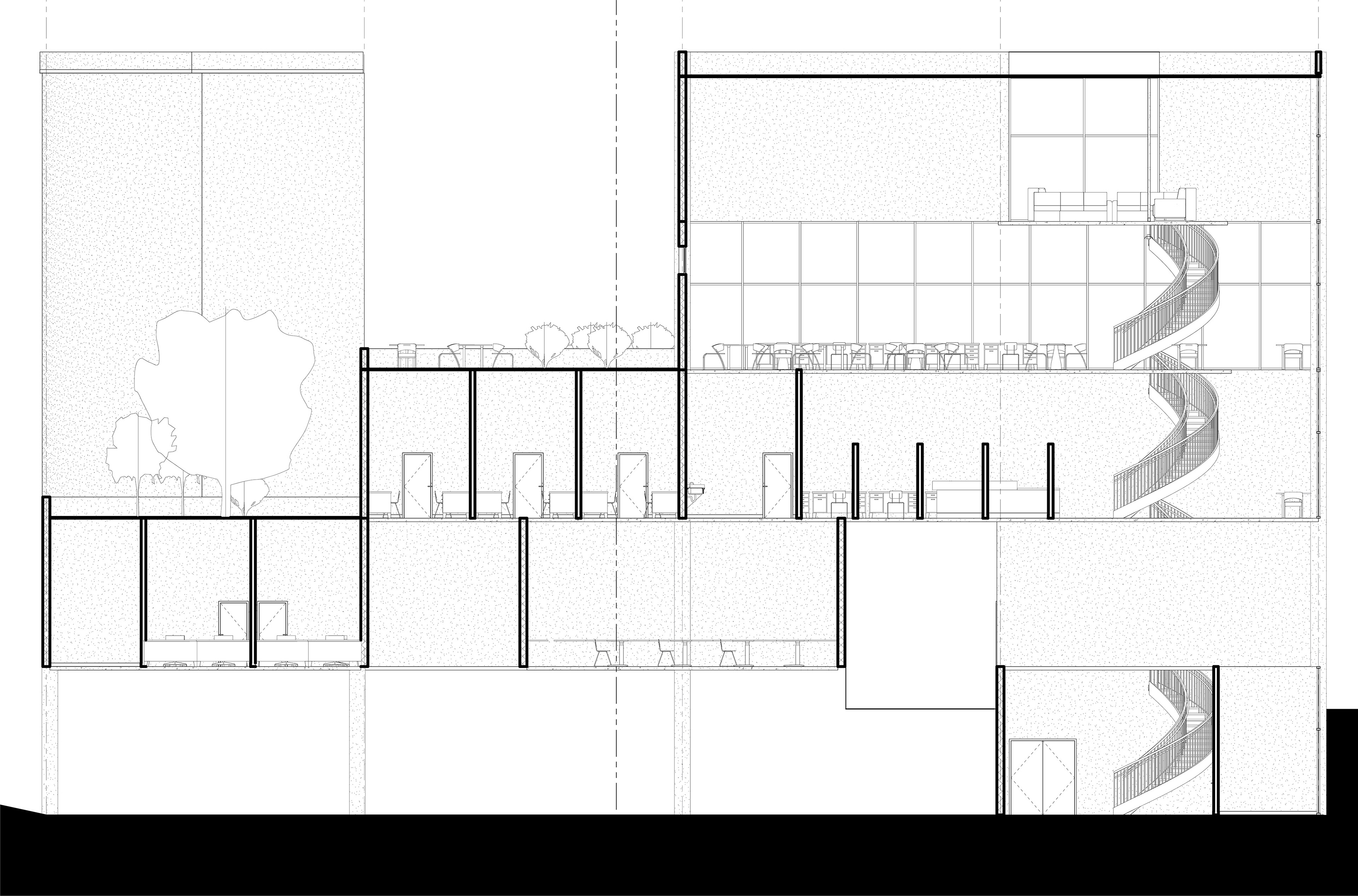
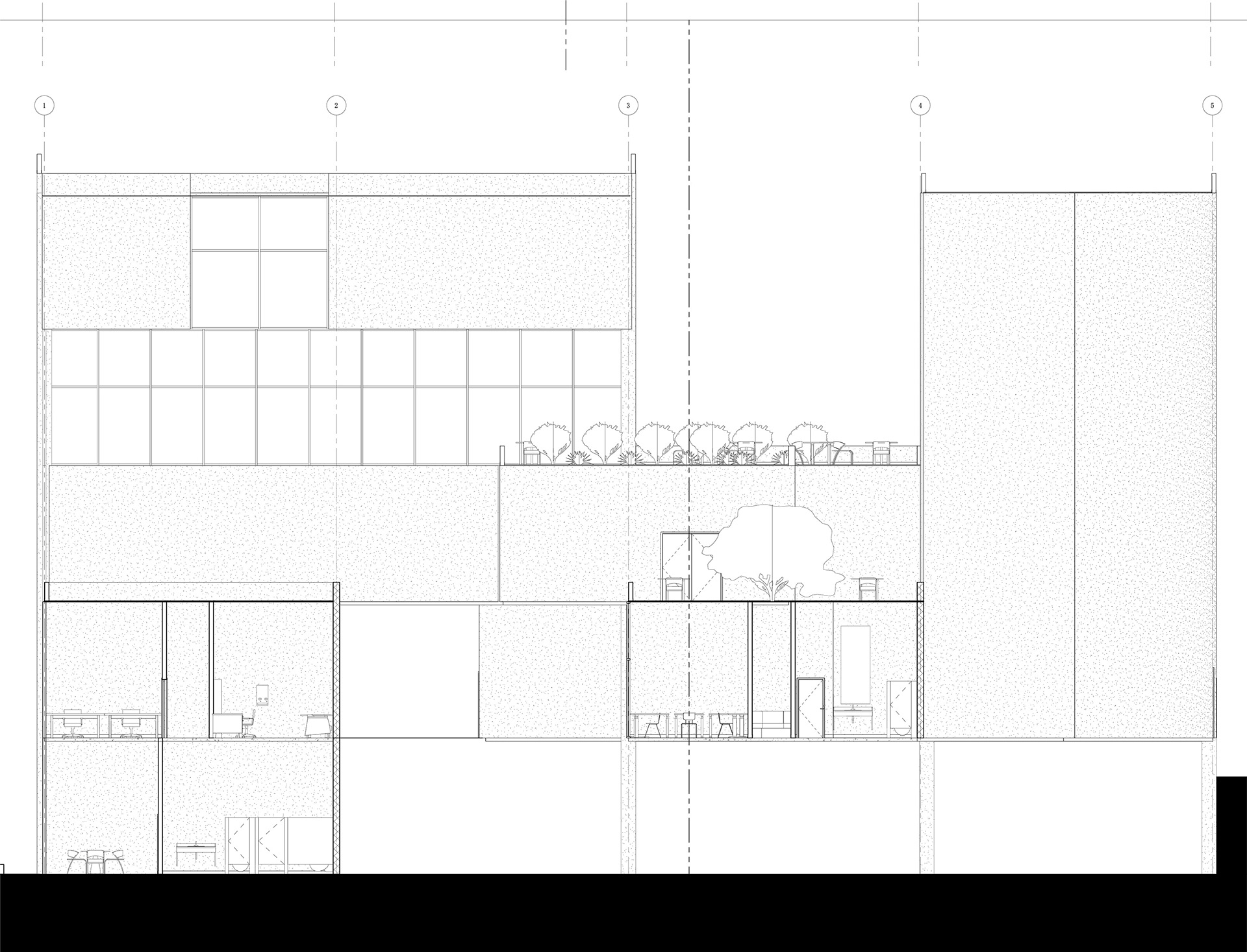
The form of this structure is unlike any other around it, characterized by
large geometric forms pushing and pulling to create elevated and sunken spaces, allowing for unique moments both inside and outside the building.
large geometric forms pushing and pulling to create elevated and sunken spaces, allowing for unique moments both inside and outside the building.
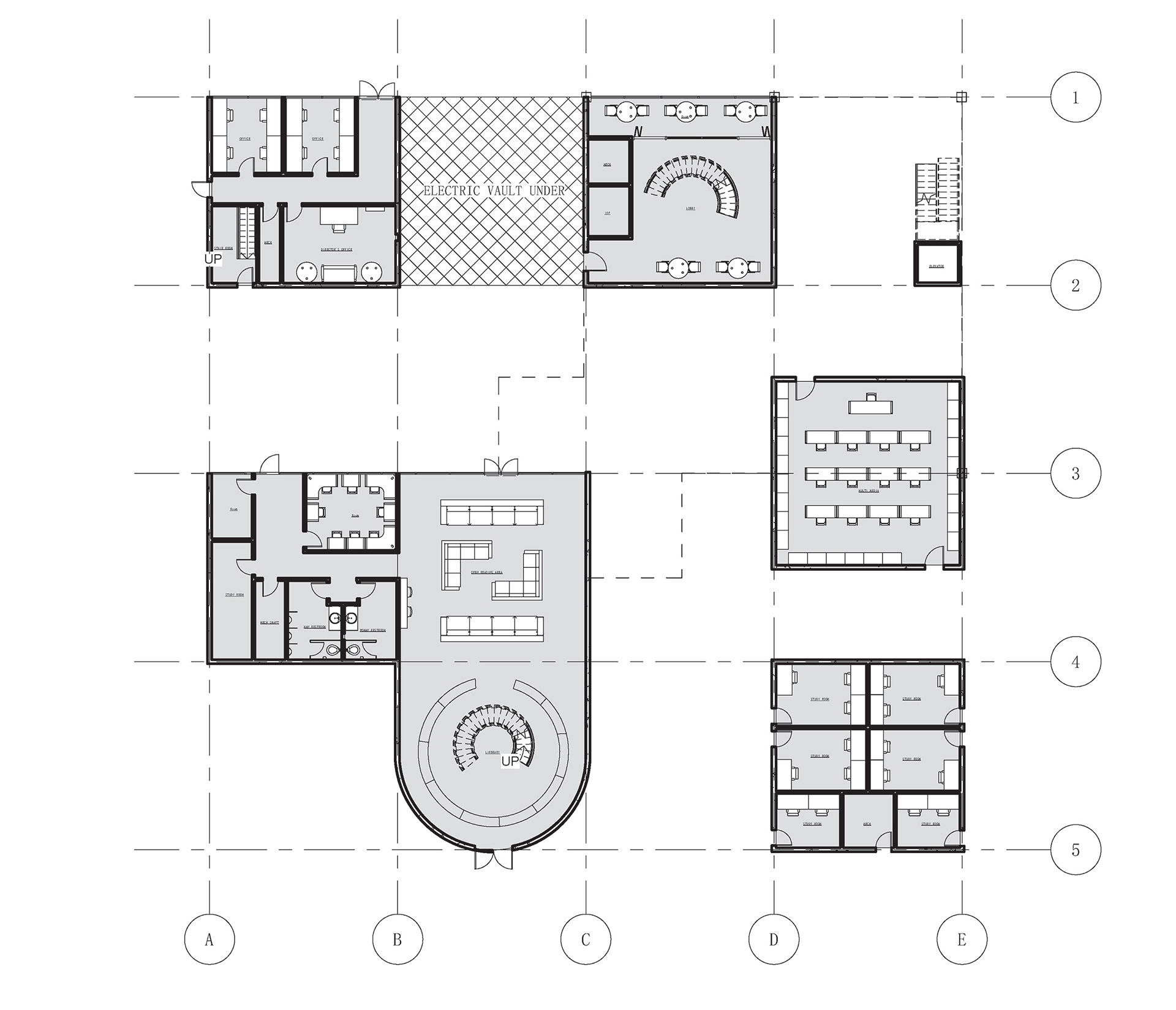
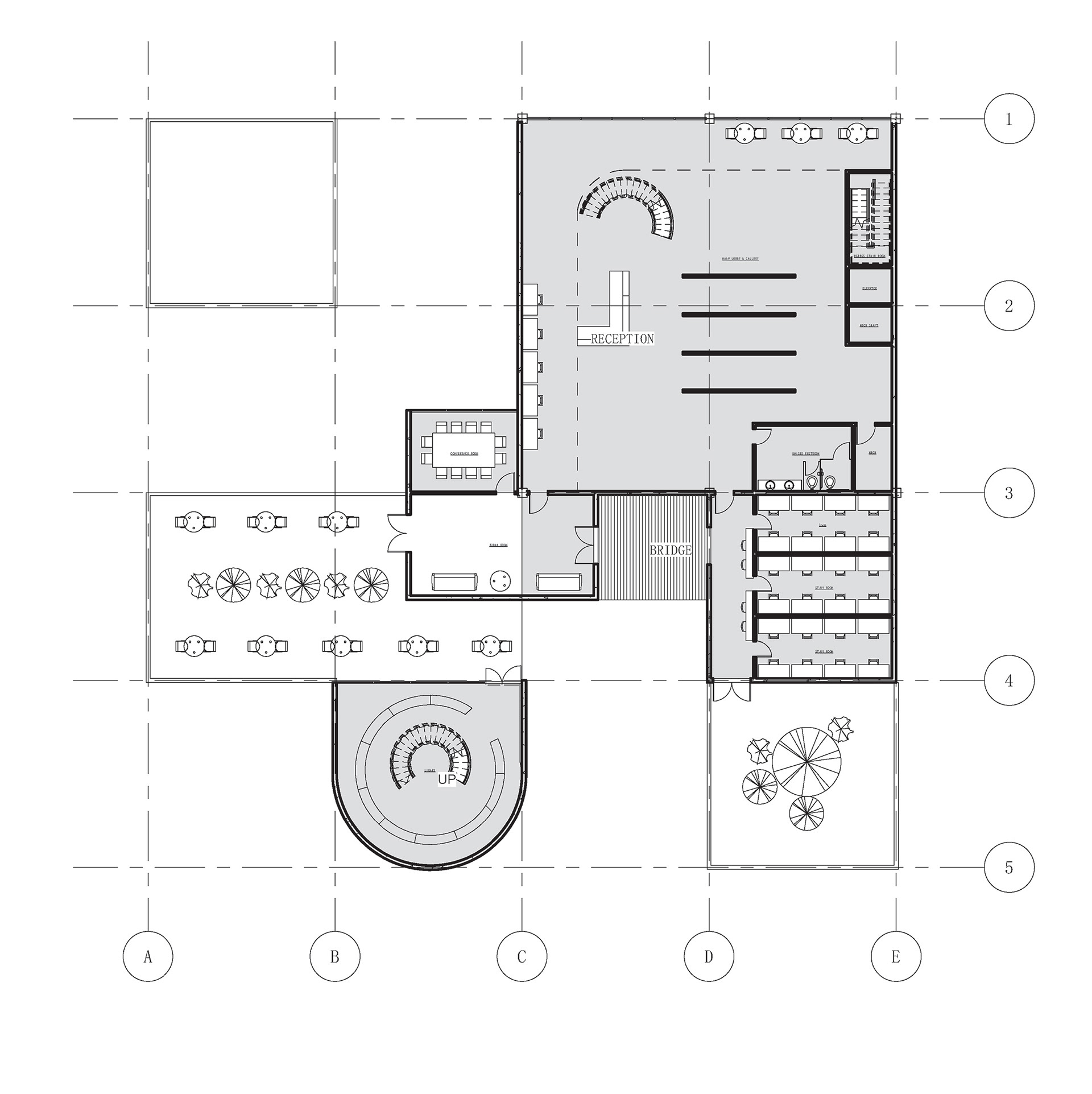
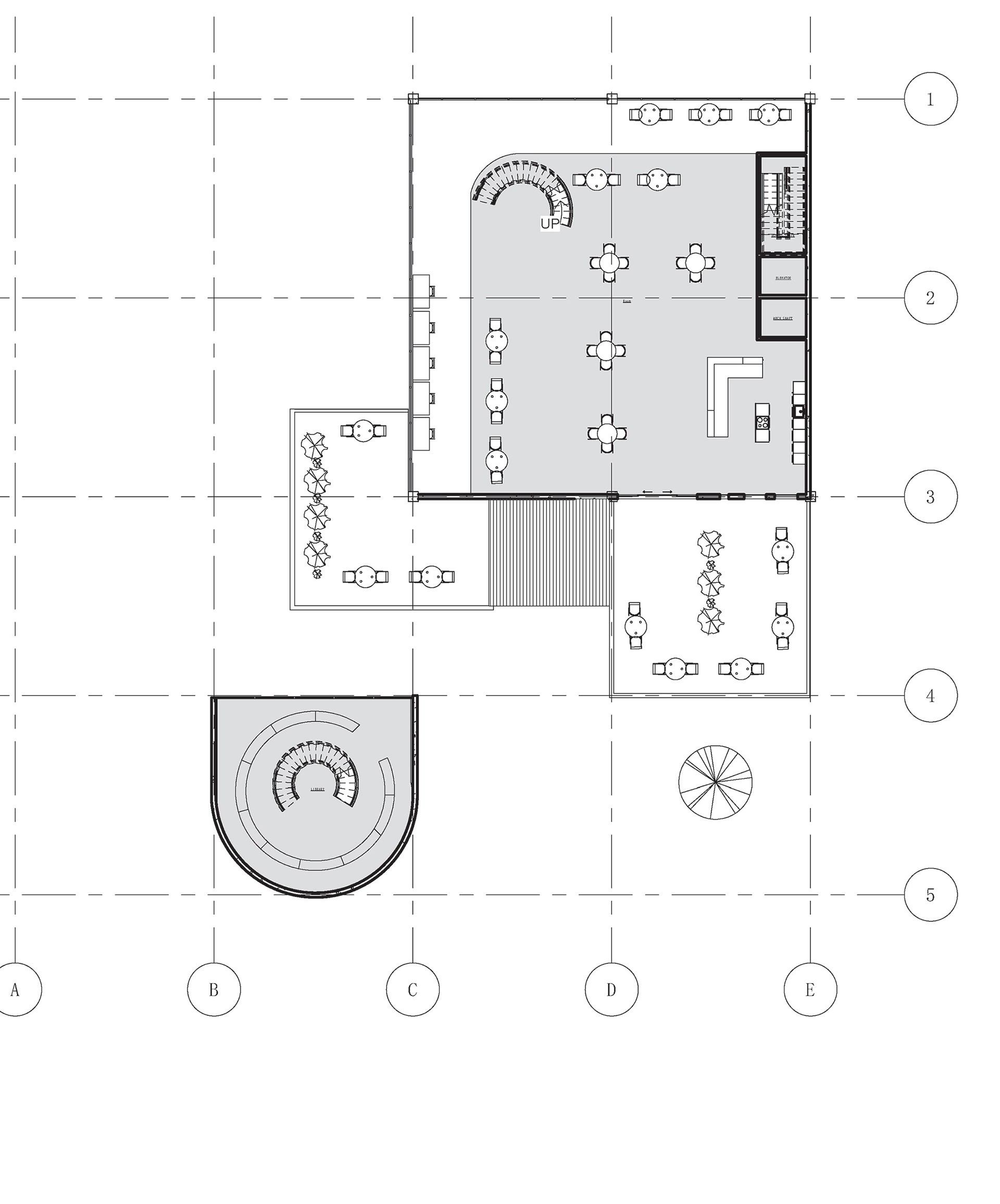
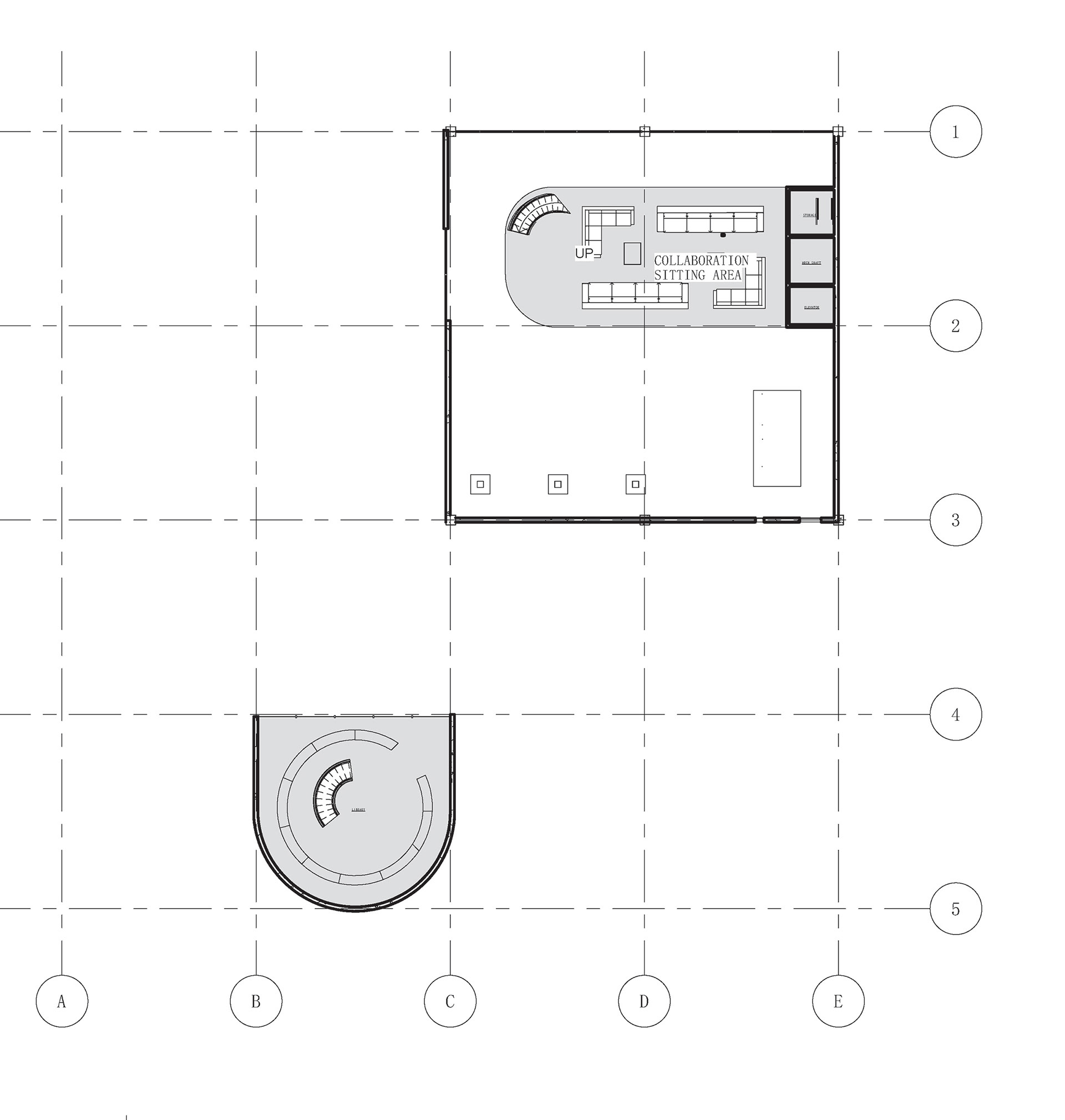
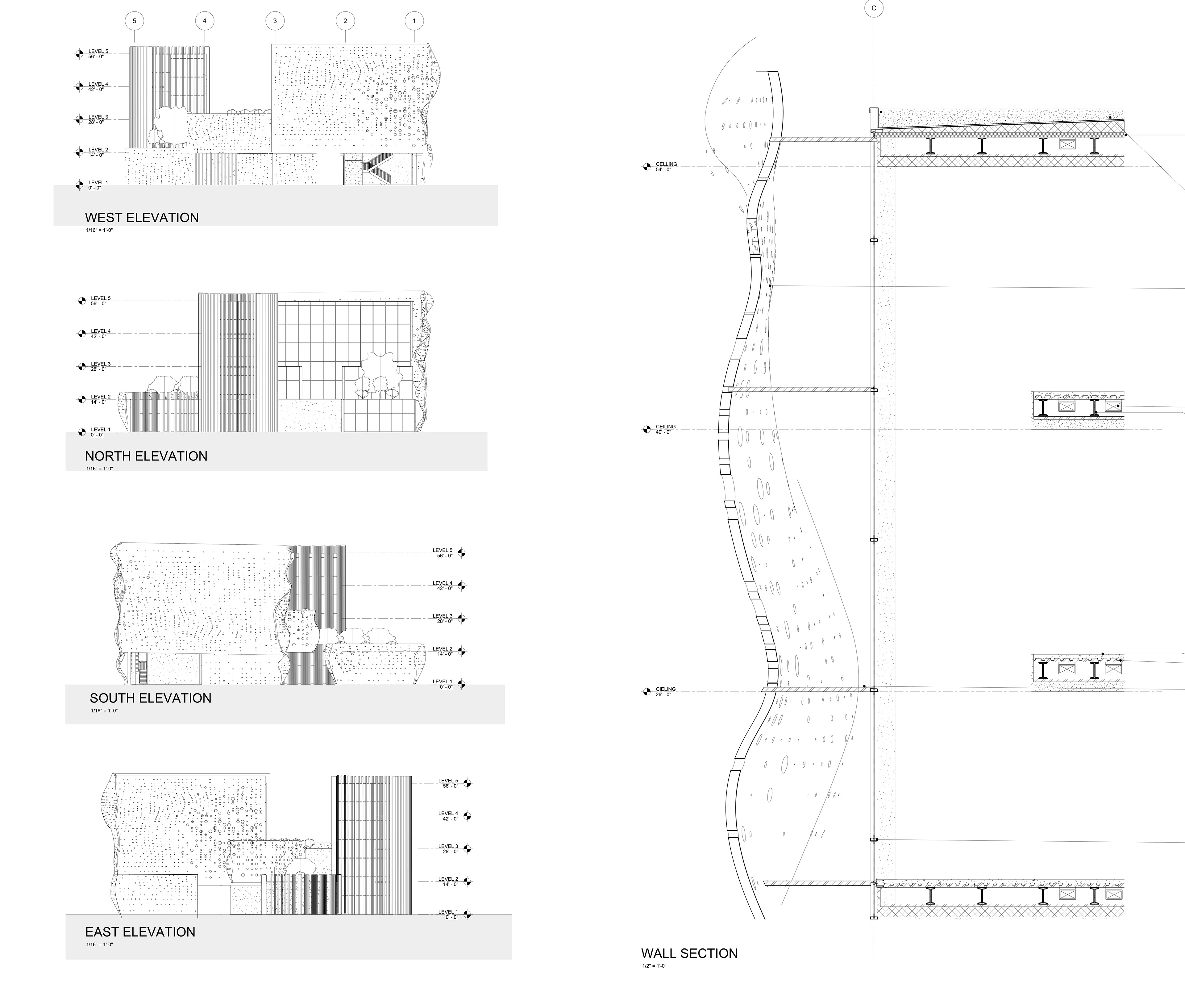
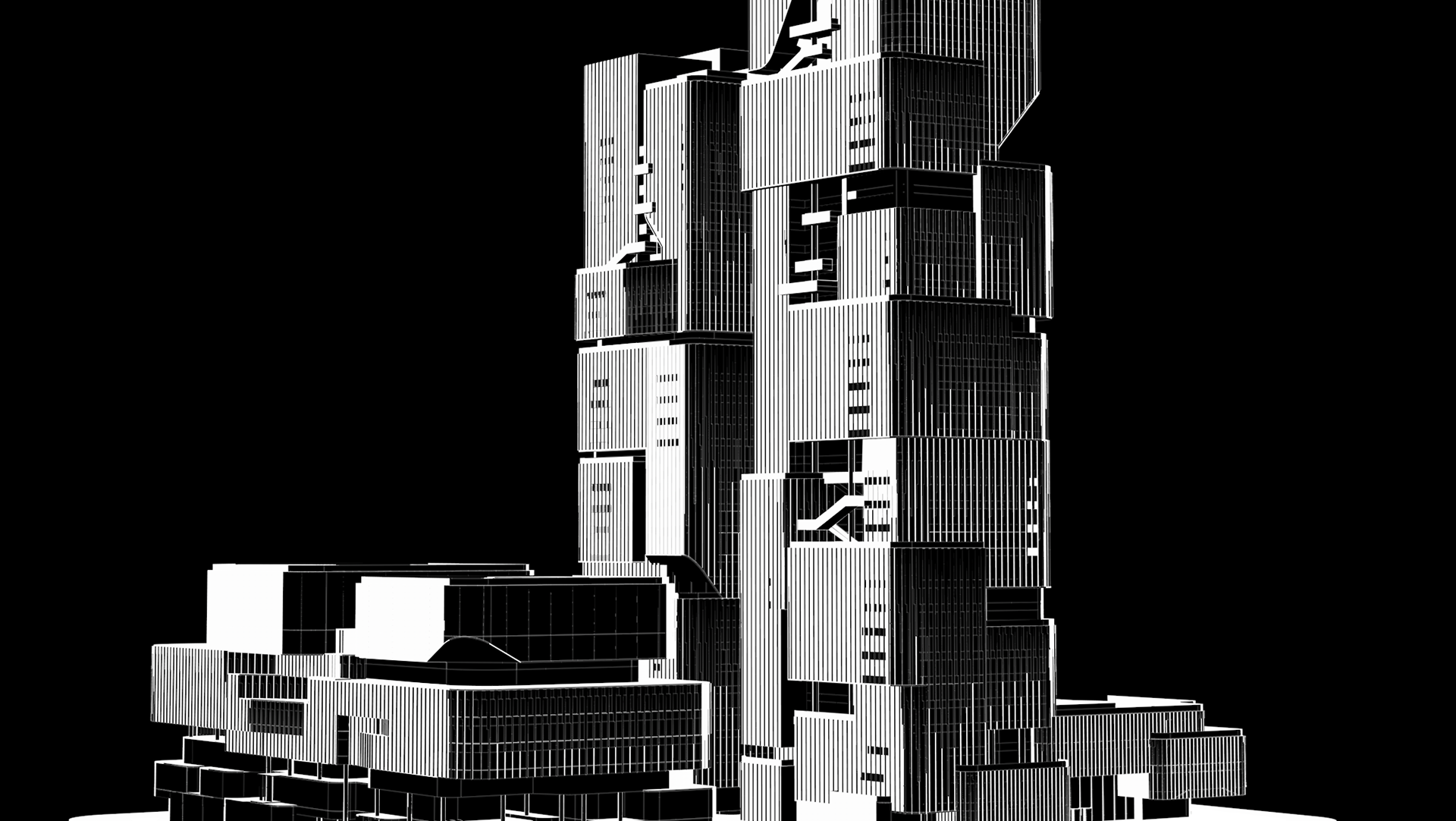
A key focus of this project was the facade.
Stretching over each side is a large perforated metal panel. Developed in Rhino using Grasshopper, the holes in the panel correspond to areas that receive more or less light, allowing for precise control over interior lighting and temperature regulation.
Areas of the building that require more natural light will be found behind sections of the panel with denser and larger perforations.
In addition to 3D Rendering, hand-drawn vignettes are a tool I use heavily in the early phases of design, forming as inspirational pieces as I move through the formal design process.